Showing posts with label IP. Show all posts

Thursday, April 20, 2023

The Price Tag of Streaming Video Piracy Losses

This is from a new report on piracy losses issued by Park Associates. 

"The practice of illegally accessing subscription streaming video services, and accessing pirate platforms has a price tag. New data from Parks Associates finds that piracy of movies and TV shows across over-the-top video platforms will reach $113 billion by 2027. Dallas-based Parks disclosed the number at the ongoing NAB trade show in Las Vegas.

The international research firm’s latest forecast reveals piracy rates for U.S. streaming services are expected to rise from 22% in 2022 to 24.5% in 2027. In addition, the value of fraudulent advertising delivered online to media and entertainment consumers may exceed $700 million in 2027."

That's $113 billion -- not $113 million -- in projected losses by 2027.


Obviously, losses of this magnitude have effects, and they are not positive. But for the theft, the lost revenue could have been used by distributors to invest in more programming and/or higher quality programming. And it could have been used to reward the creators and producers of programming to provide incentives for the continued creation of programming.

Certainly, there needs to be better means of detecting theft of intellectual property and enforcing existing sanctions. And there also needs to be a greater effort at continuing education to explain why the Founders included the Copyright Clause in the Constitution -- that is, to protect and secure for creators of intellectual property the fruits of their labors.


Thursday, August 18, 2022

Enjoying the Fruits of One's Labor and the Copyright Clause

For anyone remotely interested in intellectual property law, and more particularly copyright law, I want to commend to your attention a very important amicus brief just filed in the Supreme Court by Curt Levy and the Committee for Justice. The brief opposes what it characterizes (rightly in my view) as a radical interpretation of the fair use doctrine by the Andy Warhol Foundation for the Visual Arts.

In the context of explaining why the Warhol Foundation's unduly expansive interpretation of the fair use doctrine should be rejected, the Committee for Justice's brief states: "Copyright protections serve to vindicate the fundamental civil right that authors have to the fruits of their labors. This is how the Founders understood it at the time they enacted the Constitution with its Copyright Clause, and this is how this Court has understood it ever since." According to the brief, the Warhol Foundation "wants to change this accepted understanding of the Copyright Clause by replacing it with a utilitarian-based regime…."


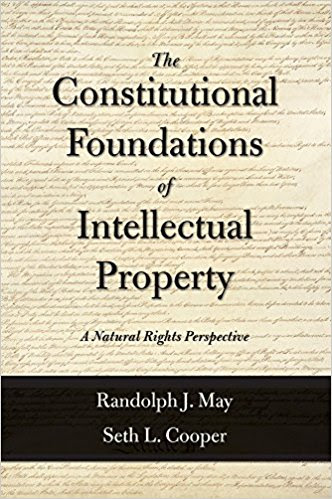
The resort by the Committee for Justice's brief to foundational "first principles" regarding the proper interpretation of the Copyright Clause is in all respects consistent with the views articulated by me and Free State Foundation Director of Policy Studies Seth Cooper in our book, "The Constitutional Foundations of Intellectual Property: A Natural Rights Perspective." Indeed, I am pleased that our book was cited as an authority in Committee's brief alongside these "other authorities" – James Kent, William Blackstone, John Locke, Adam Mossoff, Antonin Scalia, Joseph Story, and Federalist No. 43! I would not be so coy as to deny that I am honored and proud to be listed among such illustrious company, and I'm sure Seth fees the same way.

Again, for anyone with an interest in copyright law, and especially anyone with an interest in understanding why the Founders' included the Copyright Clause in the Constitution of 1787, I heartily commend to you the Committee for Justice's excellent amicus brief. And if you want to delve more deeply, well… I commend our book, "The Constitutional Foundations of Intellectual Property: A Natural Rights Perspective." It's still a bargain.

Friday, April 29, 2022

US Trade Representative Report on Global IP Threats Focuses on China

On April 27, 2022, the Office of the United States Trade Representative (USTR) released the 2022 edition of its annual Special 301 Report (Report). The Report identifies 27 trading-partner nations where the threat to American Intellectual Property (IP) rights is particularly high.

Emphasizing that "[c]ombating … unfair trade policies will encourage domestic investment in the United States, foster American innovation and creativity, and increase economic security for American workers and families," the Report places seven countries – Argentina, Chile, China, India, Indonesia, Russia, and Venezuela – on a "Priority Watch List" and twenty others on a "Watch List."

Among other concerns, the Report focuses on counterfeits, both physical and digital; online and broadcast piracy; trade secret protections; and "indigenous innovation" policies.

China, given statements by government officials suggesting that its approach to IP "should serve the needs of domestic innovation-driven development" at the expense of foreign IP rights holders, receives the lion's share of the Report's attention. Forced technology transfers, onerous licensing terms, IP-centered hacking, counterfeiting, and bad-faith trademarks are just some of the issues specific to China that the Report discusses.

Ukraine, which appeared on the "Priority Watch List" in the 2021 Special 301 Report, is excluded from the 2022 Report in light of its "premeditated and unprovoked further invasion" by Russia earlier this year. Saudi Arabia, meanwhile, was removed from the list after implementing measures to improve its enforcement of IP rights.

The Report also targets the European Union's geographical indications (GI) policies, which can cause problems for certain U.S. trademark holders.

In a March 2022 post to the Free State Foundation's blog, I noted the release of a related USTR annual report, the Notorious Markets List, which "identifies illustrative examples of online and physical markets that reportedly engage in, facilitate, turn a blind eye to, or benefit from substantial copyright piracy and trademark counterfeiting."

Thursday, March 03, 2022

2021 List of Notorious Piracy, Counterfeiting Markets Released

On February 17, 2022, the Office of the United States Trade Representative (USTR) released the eleventh edition of the Notorious Markets List (NML), its annual overview of the most glaring hotbeds, virtual and physical, for counterfeit goods and pirated content.

Officially titled the "2021 Review of Notorious Markets for Counterfeiting and Piracy," this most-recent NML provides a summary of markets "that reportedly engage in, facilitate, turn a blind eye to, or benefit from substantial piracy or counterfeiting."

The NML, which incorporates responses from the public to a Request for Comments published in the Federal Register in August of last year, is designed "to increase public awareness and help market operators and governments prioritize intellectual property enforcement efforts that protect American businesses and their workers."

(Incidentally, the NML is separate from, but related to, USTR's "Special 301 Report," a congressionally mandated yearly summary "of the global state of intellectual property (IP) rights protection and enforcement.")

The theft of copyrighted material is a serious criminal problem with massive financial implications for creative industries. Citing a U.S. Chamber of Commerce report, the NML notes that piracy "in 2019 cost the U.S. economy an estimated $29.2 billion in lost revenue." Accordingly, one of the goals of the NML is to "motivate appropriate action by the private sector and governments to reduce piracy and counterfeiting."

The 2021 edition of the NML highlights 42 online destinations and 35 geographic locations where the manufacture of counterfeit goods and the theft of copyrighted material run most rampant. The latter includes applications like Popcorn Time ("Known as the 'Netflix of piracy'") and websites such as ThePirateBay ("the most frequently visited bittorrent index site in the world").

In addition, the NML reports on enforcement-related developments, concluding that there have been "notable efforts" and "impressive results" in the ongoing fight to rein in online piracy enabled by Internet protocol television (IPTV) apps and physical illicit streaming devices (ISDs).

However, the NML also acknowledges commenters' serious concerns regarding the existence and continued evolution of what it describes as a "complex ecosystem" facilitating efforts to steal, and profit from, copyrighted content. One that includes "domain name registries and registrars, reverse proxy and other anonymization services, hosting providers, caching services, advertisers and advertisement placement networks, payment processors, social media platforms, and search engines."

A related development of heightened concern involves what the NML describes as "piracy-as-a-service" – that is, comprehensive wholesale offerings that make it even easier for a would-be pirate by providing all of the required tools: "website templates that facilitate the creation of streaming websites, databases of infringing content, dashboards that allow a pirate IPTV operator to oversee the infrastructure of their service, IPTV panels used for generating and distributing playlists of pirate IPTV channels, and hosting providers that specialize in servicing infringers."

Monday, April 19, 2021

Panel Video on The Common Purposes of IP and Antitrust

Earlier today, I joined the Committee for Justice’s Ashley Baker along with Law Professor Kristen Osenga for a virtual panel discussion on "The Common Purposes of Intellectual Property and Antitrust." Video of the panel, which runs about an hour, is now available online. The panel discussion addressed the differences between intellectual property rights – such as copyrights and patent rights – from harmful monopolies. Along the way, the panel also delved into the role of administration in IP rights, legislative proposals for changing antitrust law, and the merits of the consumer welfare standard. 

My initial comments during CFJ's panel parallel my April 7 Perspectives from FSF Scholars paper titled "The Property Rights View of Copyrights Beats Bogus Monopoly Talk" and a short item I posted on April 9 at the Federalist Society's blog titled "Copyrights are Property Rights, Not Harmful Monopolies." Free State Foundation President Randolph May and I wrote a book chapter with the same name as the CFJ panel in our book Modernizing Copyright Law for the Digital Age: Constitutional Foundations for Reform (Carolina Academic Press, 2020). 

Friday, November 20, 2020

Trump Administration Releases its Joint Strategic Plan for IP Enforcement

On November 9, the Intellectual Property Enforcement Coordinator (IPEC) released the 2020 to 2023 Joint Strategic Plan by coordinated federal agencies for promoting and protecting intellectual property (IP) rights. 

The IPEC-developed plan provides an overview of recent and ongoing strategic efforts by the Trump Administration in all areas of IP policy, including copyrights. And it addresses domestic IP policy issues as well as initiatives to ensure that Americans' IP rights receive protections internationally. Included in the Joint Strategic Plan are efforts to better secure copyrights from infringement – particularly online infringement:

The [U.S.-China] Phase One Agreement requires China to provide effective and expeditious action against infringement in the online environment, including by requiring expeditious takedowns and by ensuring the validity of notices and counter notices. It also requires China to take effective action against e-commerce platforms that fail to take necessary measures against infringement. The United States and China agreed to address additional intellectual property issues, including with regard to unauthorized camcording of motion pictures and copyright protection for sporting event broadcasts, in future negotiations... 


The Justice Department and the Department of Homeland Security will continue to aggressively investigate and prosecute individuals and corporations that engage in large-scale online copyright piracy (through illicit streaming services and anti-circumvention devices), which not only violates the rights of copyright holders but also often involves the commission of other serious crimes such as money laundering and tax evasion… In addition, the Justice Department, DHS, and other Federal agencies (as appropriate) will also continue to work with foreign law enforcement and other governmental offices to prosecute and otherwise prevent large-scale online copyright piracy, including the large-scale online pirates that are identified in USTR’s annual List of Notorious Markets... 


The Department of Homeland Security (U.S. Customs and Border Protection (CBP)) will continue to modernize, update and expand the existing e-Recordation program, which provides right holders the opportunity to record their registered trademarks and copyrights to receive enhanced border enforcement of the IP. DHS will continue to provide education and outreach to the industry regarding the critical importance of obtaining trademark and copyright recordations in order to stem the flow of infringing goods into the United States. DHS will continue to educate personnel at all Ports of Entry on the importance of IP enforcement, and arm them with the necessary tools to detect and interdict infringing goods at the border...


The United States will continue to support and encourage the broader and more regularized adoption of voluntary "Trusted Notifier" agreements involving Internet domain registries. These agreements have proven effective in removing websites that engage in large-scale copyright piracy, as has been demonstrated in the implementation of the agreements that the MPAA (now, the MPA) entered into in 2016 with the Radix and Donut registries.

We will likely have more to say on the Joint Strategic Plan – particularly its call for further examination of the copyright "notice-and-takedown" system for removing expeditiously infringing content from Internet websites. Free State Foundation President Randolph May and I wrote about the need for reforms to the "notice-and-takedown" provision in the Digital Millennium Copyright Act in our June 2020 Perspectives from FSF Scholars paper, "Copyright Office Report Should Spur Modernizing the DMCA."

Thursday, May 28, 2020

U.S. Trade Rep's Notorious Markets Report Tackles Online Copyright Piracy

Today, Free State Foundation President Randolph May and I published a Perspectives from FSF Scholars paper titled "Modernize Copyright Protections to Combat Worldwide Online Piracy." The short paper discusses the U.S. Trade Representative's "Special 301 Report" and the need for updated measures to combat online piracy of copyrighted movies, TV, and music.

The U.S. Trade Representative released the Special 301 Report alongside a second report: the 2019 Review of Notorious Markets for Counterfeiting and Piracy. The Notorious Markets Report "highlights prominent and illustrative examples of online and physical markets that reportedly engage in or facilitate substantial privacy or counterfeiting. A goal of the [Notorious Markets List] is to motivate appropriate action by the private sector and governments to reduce piracy and counterfeiting."
This year's Notorious Markets Report includes e-commerce platforms and related online third-party marketplaces along with physical markets that traffic in counterfeit and pirated goods. The Report calls on third party marketplaces to do more to curb such trafficking, and endorsed the steps urged by the Department of Homeland Security in a report released in January of this year.
Additionally, this year's Notorious Markets Report features the nexus between malware and piracy as a focus issue. Dangerous malware is frequently involved in the payment processes or embedded with the pirated content, putting financial and other data of users at risk. Purchasing movies, TV, music and other content from legitimate vendors is therefore a matter of consumer safety. The connection between malware and copyright piracy is also addressed in our new book, Modernizing Copyright Law for the Digital Age – Constitutional Foundations for Reform.
We have called attention to previous editions of the Notorious Markets Report in blog posts from 2019 and 2018.

Wednesday, April 15, 2020

Tennessean Op-Ed on Modernizing Copyright Law for the Digital Age

Free State Foundation President Randolph May and I today published an op-ed in The Tennessean titled "Three Ways to Modernize Copyright Laws in the Digital Age." The just-published op-ed touches on themes we addressed in more detail in our new book, Modernizing Copyright Law for the Digital Age – Constitutional Foundations for Reform(Carolina Academic Press 2020). Our thanks go to The Tennessean for publishing our op-ed. Be sure to check it out at The Tennessean's website. Our new book is available both in print and e-book editions. 

Monday, March 23, 2020

Modernizing Copyright Law for the Digital Age – E-Book Now Available

Modernizing Copyright Law for the Digital Age – Constitutional Foundations Reform, the new book by Free State Foundation President Randolph May and I, is now available in Kindle e-book format. Print copies are available for order at Amazon as well as at Carolina Academic Press's website. Our earlier book, The Constitutional Foundations of Intellectual Property: A Natural Rights Perspectiveis now also available for Kindle.

Friday, February 21, 2020

New Book: "Modernizing Copyright Law for the Digital Age"

In Modernizing Copyright Law for the Digital Age: Constitutional Foundations for Reform, Randolph May and Seth Cooper connect constitutional principles and historical insights to recommendations for updating U.S. copyright law to meet the challenges of the Digital Age.

Copyright owners and copyright-intensive industries are vital engines of prosperity in our Digital Age economy. But current U.S. copyright law fails to protect adequately copyrighted works from infringement enabled by modern-day digitization and Internet connectivity. The law needs updating to curb the billions in economic losses caused annually by bad actors in America and abroad.

In reforms grounded in constitutional principles, Modernizing Copyright Law for the Digital Age addresses areas such as international trade, public contracts, private contracts, compulsory licensing and rate regulation, antitrust, and so-called moral rights. This timely book details steps that Congress should consider for updating copyright policy in hot-topic areas, including music royalties, Copyright Office reform, civil enforcement, criminal enforcement, and international protections.

The book is now available from Amazon here or from Carolina Academic Press here.

Tuesday, January 28, 2020

Homeland Security to Step Up Efforts Against Counterfeit and Pirated Goods

On January 24, the U.S. Department of Homeland Security released "Combatting Trafficking in Counterfeit Goods," a report to the President of the United States. The report lays out a series of actions that federal law enforcement agencies plan to take in order to combat the growing problem of trafficking in copyright-infringing goods as well as other counterfeit or pirated products.

Over the last several years, international trafficking in counterfeit and pirated goods – including infringing copies of copyrighted works – has increased. The report cites OECD figures indicating an increase in internationally traded counterfeits from $200 billion in 2005 to $509 billion in 2016, a 154% increase. As the report observes: "E-Commerce…facilitates the widespread sale of pirated versions of copyrighted works. Pirated medical books — which can contain errors that endanger patients’ lives — have been found on platforms along with other pirated books (textbooks and trade books) and illicit reproductions of music-CD box sets."

The purpose of DHS's report is "to develop a deeper understanding of how e-commerce platforms, online third-party marketplaces, and other third-party intermediaries facilitate the importation and sale of massive amounts of counterfeit and pirated goods." The report points out: "[R]ights holders are often burdened by e-commerce platforms that operate third-party marketplaces with a disproportionate share of the costs of monitoring, detection, and enforcement falling on rights holders. This burden falls heavily on smaller American enterprises that cannot spread the costs due to trademark infringements and brand enforcement over large sales and inventories." 

The report sets forth several enforcement-related actions that the U.S. Customs and Border Protection and the U.S. Immigration and Customs Enforcement agencies intend to take to curb the trafficking of counterfeited pirated goods into the U.S. Significantly, the report identifies application of civil fines, penalties, and injunctive actions for imports of counterfeit and pirated products. According to the report:
  • CBP and ICE will immediately begin to identify cases in which third-party intermediaries have demonstrably directed, assisted financially, or aided and abetted the importation of counterfeit merchandise. In coordination with the Department of Justice, CBP and ICE will seek all available statutory authorities to pursue civil fines and other penalties against these entities, including remedies under 19 U.S.C. § 1526(f), as appropriate. 
  • DHS recommends the administration pursue a statutory change to explicitly permit the government to seek injunctive relief against third-party marketplaces and other intermediaries dealing in counterfeit merchandise. 
  • In the interim, DHS will provide information and support to registered brand owners looking to utilize statutory authorities to seek injunctive relief against persons dealing in counterfeit merchandise, whether through direct sales or facilitation of sales, following seizures of goods that are imported contrary to law. 
  • ICE shall prioritize investigations into intellectual property-based crimes regardless of size and will make referrals for all such investigations where appropriate. 
  • ICE will coordinate with the Department of Justice to develop a strategy to investigate and prosecute intellectual property violations at all levels of the supply chain at a sufficiently high level to respond to the concerns raised in this report and according to its budget and broader mission goals. 

The DHS report's action items and recommendations appear sensible and hopefully will help reduce trafficking in copyright-infringing goods as well as other counterfeit and pirated products. Free State Foundation President Randolph May and I have previously recommend that foreign trade agreements and treaties negotiated by the U.S. include language requiring foreign nations to improve their interdiction efforts and prosecutorial resources to stop the international flow of infringing goods and other illicit products. 

Friday, January 24, 2020

Senate Passes the USMCA

On January 16, the U.S. Senate passed H.R. 5430, the United States-Mexico-Canada Agreement Implementation Act. The Senate deserves credit for promptly approving the USMCA following its passage in the House of Representatives in December 2019. The USMCA includes several provisions that will help strengthen Americans' copyrights in those neighboring nations. H.R. 5430 has been transmitted to President Trump for signature. 

Free State Foundation President Randolph May and I described the pro-copyright provisions contained in the USMCA and recommended its passage. My April 2019 Perspectives from FSF Scholarspaper, "Trade Agreements Should Include Stronger Online Copyright Protections" and my similarly-titled October 2019 Perspectivespaper, "Trade Agreements Should Strengthen Copyright Protections Against Piracy" also discussed the USMCA's pro-copyright features.

Thursday, August 08, 2019

Trade Agreements Should Not Export Ineffective Copyright Laws


On August 6, 2019, Representatives Frank Pallone, Jr. and Greg Walden, the Chairman and Ranking Member of the House Committee on Energy and Commerce, sent a letterto U.S. Trade Representative Robert Lighthizer expressing their concern that the proposed United States-Mexico-Canada Agreement (USMCA) contains a provision (Article 19.17) that mirrors Section 230 of the Communications Decency Act. Section 230 shields online services from some of the liability associated with third-party content posted on the services. As Chairman Pallone and Ranking Member Walden observe, "the effects of Section 230 and the appropriate role of such liability shield have become the subject of much debate in recent years."
In light of the ongoing debate in the U.S. regarding Section 230, Congressmen Pallone and Walden state:
"While we take no view on that debate in this letter, we find it inappropriate for the United States to export language mirroring Section 230 while such serious policy discussions are ongoing. For that reason, we do not believe any provision regarding intermediary liability protections of the type created by Article 19.17 are ripe for inclusion in any trade deal going forward."
Like Chairman Pallone and Ranking Member Walden, I don't take any position here on the current debate surrounding Section 230.
But their letter does readily call to mind a similar point made by my Free State Foundation colleague Seth Cooper in his April 2019 Perspectives from FSF Scholars titled, "Trade Agreements Should Include Stronger Online Copyright Protections." In his paper, Seth points out that the USMCA's Article 20.J.11 incorporates provisions that are based on Section 512 of the 1998 Digital Millennium Copyright Act. Section 512 is the provision that contains a "notice and takedown" process addressing when online service providers can receive limited liability protections for infringing content and activity on their websites. In other words, like Section 230, Section 512 is a statutory provision limiting the liability of online provider intermediaries.
In his Perspectives, Seth explains why Section 512, geared to 1990s dial-up Internet technologies, "takes a decidedly un-modern approach to online copyright infringement that takes place on user-upload websites." And he explains there, as Seth and I have previously in "Modernizing International Agreements to Combat Copyright Infringement" and elsewhere, why Congress needs to modernize Section 512 in order to protect copyright holders from rampant infringement. Inclusion of Article 20.J.11 in the USMCA agreement, mirroring as it does Section 512, risks perpetuating the deficiencies in the current under-protective notice-and-takedown system that prevails in U.S. copyright law.
Therefore, Seth's April 2019 Perspectives concluded, in language that bears repeating:
"Absent clarification, inclusion of Section 512-like terms in the USMCA also risks limiting Congress' ability to modernize U.S. copyright law to better combat online infringement….[T]he Administration and Congress should make clear that the USMCA's online infringement provisions are not precedent for future trade agreements. Statements of administrative action by the U.S. Trade Representative expressly should affirm that Article 20.J.11's provisions are limited to the USMCA itself.
Going forward, Section 512-like terms – as least as long as Section 512 remains un-modernized – should not be included in U.S. trade agreements. In the face of this century's technological advances, the U.S. should not let international agreements bind Congress by chaining copyright enforcement to last century's technological assumptions."
Indeed, this is the same point made by Representatives Pallone and Walden in their letter with regard to Section 230. The same logic applies to the USMCA's provision mirroring Section 512.
In sum, Congress needs to reexamine Section 512 as a matter of modernizing U.S. domestic law to reduce illegal copyright infringement. And in face of such reexamination, going forward, U. S. trade agreements should not export provisions containing Section 512-like terms.

Wednesday, March 06, 2019

IP Enforcement Coordinator's Report Spotlights Copyright Protection Progress

In late February, the Intellectual Property Enforcement Coordinator (IPEC) released its Annual Intellectual Property Report to Congress. The Report provides "an overview of the Trump Administration's intellectual property enforcement strategy and policy efforts" across multiple agencies. IPEC's coordination and development of U.S. IP policy is intended "to promote innovation and creativity, and to ensure effective intellectual property protection and enforcement, domestically and abroad." 

Although the Trump Administration's enforcement policy "includes all areas of intellectual property and innovation policy," its policy activities regarding copyright protections merit attention. In 2018 progress was made in better securing copyrights. But there is plenty more that the Trump Administration and the 116th Congress can do to modernize and strengthen protections for Americans' creative works. 

One achievement touted in the Report is the passage of the Music Modernization Act of 2018. In an op-ed for The Hill and in several blog posts, Free State Foundation President Randolph May and I urged Congress to adopt reforms contained in that legislation. The Act (1) secured federal copyright protections for public performances via digital audio transmission of pre-1972 sound recordings; (2) established a streamlined process for producers, mixers, and sound engineers to directly receive royalty payments; and (3) facilitated more timely and accurate payment of songwriter "mechanical license" royalties and also provided blanket licenses for digital streaming services. As I explained in a February blog post, the widely endorsed MLC Coalition will be submitting to the U.S. Copyright Office a proposal for creating a collective entity to administer mechanical license royalties pursuant to the Act. 

An appendix in the IPEC Report highlighted the Copyright Office's expected release of its public study report on the "moral rights" of authors. Moral rights provisions in foreign nations typically restrict or prohibit sales or transfers of authors' rights to be acknowledged as creators of their works as well as their rights to control the integrity or future use of their works. In a Perspectives from FSF Scholars, Randolph May and I made the case that "current U.S. copyright law as well as contract law protect authors’ and creative artists’ rights to control whether they receive credit for their copyrightable works and whether their works are adapted into new media or transformed." We concluded: "Importing additional foreign-based moral rights restrictions into U.S. copyright law would create legal uncertainties, destabilize existing voluntary contract arrangements, reduce market freedom, and threaten the market value of copyrighted works."

The IPEC Report also referenced the Copyright Office's ongoing public study of Section 512 of the Digital Millennium Copyright Act of 1998 (DMCA). Section 512 contains the so-called "notice-and-takedown" provision under which copyright holders are entitled to give notice to an online service provider when infringing content is posted on its network or website. A provider receives immunity if it “responds expeditiously to remove, or disable access to, the material that is claimed to be infringing.” 

Unfortunately, owners of copyrighted sound recordings, movies, and other creative works suffer steep financial losses from mass online infringement. They also experience difficulties navigating the DMCA's outdated legal processes. The DMCA was adopted before user-upload sites such as YouTube became prevalent. In a Perspectives paper, Randolph May and I called attention to the urgent need to update the law, and we highlighted ways that Congress can reduce notice-and-takedown compliance burdens for copyright holders and improve protections from online infringement. That same paper also called on Congress to adopt a voluntary small claims court for resolving disputes over alleged online infringement involving copyright owners of modest means. 

Additionally, the IPEC Report identifies ongoing criminal copyright investigations and prosecutions by federal law enforcement. A Report appendix noted that the U.S. Justice Department "continues to pursue significant, large-scale piracy and counterfeiting operations." It cited the March 2018 sentencing for criminal copyright infringement of the owner of Sharebeast.com, which "operat[ed] a massive file-sharing infrastructure that distributed approximately 1 billion copies of copyrighted musical works through Internet downloads." Indeed, the Report cited the Recording Industry Association of America's (RIAA) description of Sharebeast.com as "the largest online file-sharing website specializing in the reproduction and distribution of infringing copies of copyrighted music operating out of the United States." The RIAA estimated $6.3 billion in total loss to its members. Furthermore, according to the Report, the FBI had pending "23 investigations of copyright infringement related to software,""41 investigations of other copyright infringement," and "8 investigations of copyright infringement related to signal theft" of video programming at the end of fiscal year 2018. 

Randolph May and I published a Perspectives paper on how Congress ought to modernize criminal copyright law to combat online piracy. For starters, Congress should make online piracy via Internet streaming a felony. Prosecutions for criminal copyright infringement are not numerous, and they are limited to willful infringement of protected works. However, civil copyright enforcement is oftentimes inadequate for curbing large-scale online piracy operations like Sharebeast.com. In another Perspectives from FSF Scholars, we emphasized the need to modernize international agreements by requiring foreign nations to step up criminal copyright enforcement against large-scale online piracy. 

The IPEC Report is valuable in spotlighting key achievements and ongoing initiatives by the Trump Administration to strengthen protections for IP, including copyrighted works. In 2019, the Trump Administration and the 116th Congress ought to commit to building on that progress to better secure Americans IP rights and to advance our economy in the Digital Age. 

Friday, March 01, 2019

IP Commission Recommends Steps to Protect America From International IP Theft

On February 21, 2019, the Commission on the Theft of American Intellectual Property issued a report highlighting "policy developments in the last 18 months related to strengthening the United States' ability to protect IP." The IP Commission's 2019 Review focused on U.S.-China relations, offering recommendations for more effectively preventing forced technology transfers, economic espionage, and intellectual property (IP) theft. 

According to the IP Commission's 2017 report, "the annual cost of counterfeit goods, pirated software, and theft of trade secrets to the U.S. economyis between $225 billion and $600 billion," and China is "the world's principal IP infringer." In fiscal year 2017, 87% of counterfeit goods seized coming into the U.S. originated from China and Hong Kong.

The IP Commission's 2019 Review applauded American policymakers' responses to Chinese IP wrongful practices:
The Trump Administration has elevated the elimination of China’s theft of American IP, whether through cyber-theft, forced technology transfers, stolen trade secrets, counterfeiting of products, or other means, to one of the leading foreign policy priorities and a top goal of the U.S.-China economic negotiations. 

The IP Commission acknowledged the Section 301 investigative report findings of the United States Trade Representative (USTR) regarding Chinese IP policies and practices. The USTR concluded that China "unfairly target[s] critical U.S. technology with the goal of achieving dominance in strategic sectors" and that its practices are harmful to American innovation and competitiveness. Additionally, the IP Commission's 2019 Review acknowledged the USTR's placement of China on the "Priority Watch List" over concerns that include "trade secret theft, online piracy and counterfeiting, a high volume of manufacturing and exporting counterfeit goods, technology transfer requirements, mandatory application of adverse terms to foreign IP licensors, localization requirements, and weak enforcement." 

Finally, the IP Commission made several recommendations for strengthening American IP protections from foreign theft, including: (1) construction of an"independent international database for scoring of entities from foreign countries that pose IP risk;" (2) a streamlined process for reporting and responding to IP theft; (3) requiring the Securities and Exchange Commission (SEC) to determine whether companies' use of stolen IP ought to be publicly reported; (4) meaningful sanctions by the Federal Trade Commission (FTC) against foreign companies using stolen IP; and (5) use of "multilateral institutions to harmonize national and international legal and regulatory frameworks."

Previously, FSF President Randolph May and I have addressed the pressing need to strengthen protections for Americans' IP internationally – particularly for copyrighted movies and music. In our Perspectives from FSF Scholars paper, "Modernizing International Copyright Agreements to Combat Copyright Infringement," we explain that several foreign countries insufficiently protect Americans' copyrighted works from digital piracy and online infringement taking place through cyberlocker websites and stream-ripping websites. As we urged there: "The Trump Administration should ensure that stronger protections for Americans' creative works are included in new treaties and trade agreements that are attuned to the Digital Age."

In particular, the proposed United States-Mexico-Canada Agreement (USMCA) would strengthen copyright protections and enforcement by securing Americans' full enjoyment of exclusive rights in sound recordings, ensuring longer protection terms, and providing stronger civil remedies and criminal penalties for copyright infringement. However, international agreements such as USMCA should not include outdated online infringement provisions that are similar to Section 512 of the Digital Millennium Copyright Act of 1998. Section 512 is ineffective in protecting copyrighted movies and music from massive online infringement via user-upload websites. We identify problems with Section 512 and call for reforms to strengthen online copyright protections in our Perspectives paper, "Modernizing Civil Copyright Enforcement for the Digital Age Economy: The Need for Notice-and-Takedown Reforms and Small Claims Relief."

In sum, in the interest of securing greater protection for Americans' intellectual property, it's worth paying close attention to the IP Commission's most recent report

Thursday, August 09, 2018

Senate Should Vote on the Bill to Modernize Music Copyright

Congress last overhauled the Copyright Act back in 1976, and provisions in the old law are often a poor fit for today’s digital music marketplace. Right now Congress has a stellar opportunity to make overdue updates to music copyright law. In April, the House of Representatives unanimously passed the Music Modernization Act. The Senate Judiciary Committee unanimously passed a similar bill in June. Rather than let this important legislation get sidetracked now, the Senate should act promptly to vote on the Music Modernization Act. 

The Music Modernization Act is an omnibus bill that would better secure copyright protections and royalty payments for recording artists, songwriters, and other music professionals. If passed by the Senate and signed into law, the bill would: (1) secure to copyright owners of sound recordings made before 1972 federal copyright protections for public performances of their recordings via digital audio transmission; (2) set up a streamlined process for producers, mixers, and sound engineers to receive direct royalty payments via SoundExchange; and (3) enable more timely and accurate payment of market-based “mechanical license” royalties to songwriters while providing blanket licenses for digital streaming services. 

Despite unanimous votes in the House of Representatives (H.R.5547) and in the Senate Judiciary Committee (S.2823), there are reports that the Music Modernization Act is being held up by just a few members of the Senate on account of the bill applying a uniform market-based “willing buyer/willing seller” royalty rate and providing full protection terms to pre-72 sound recordings. But these objections don’t hold up. They should not keep the Senate from taking a timely vote on the Music Modernization Act.

First, the “willing buyer/willing seller” royalty rate standard is the most sensible standard for achieving the purpose of music copyright law, and the Music Modernization Act’s expansion of that standard to pre-72 sound recordings and to music compositions is commendable. 

Under many circumstances, music copyright holders are subject to a compulsory licensing system in which licensees must pay royalties according to a rate formula set by Congress and applied by the Copyright Royalty Board. Although copyright holders are free to negotiate royalties with music service providers, those rates operate as backstops when negotiating is particularly burdensome or unsuccessful. Unfortunately, current law imposes different music copyright royalty rates depending on the delivery technology or service involved. Such a non-neutral approach is arbitrary and unjustifiable. Copyright law should not specially privilege one type of technology or service over others. Rather, it should apply the same standard across the board.  

The Music Marketplace Act sensibly follows the U.S. Copyright Office’s 2015 report recommendationthat “[a] single, marketoriented ratesetting standard should apply to all music uses under statutory licenses.” Indeed, the “willing buyer/willing seller” standard is market-oriented in that it is intended to “most clearly represent the rates and terms that would have been negotiated in the marketplace” among willing parties. As mentioned above, the Music Modernization Act would apply the “willing buyer/willing seller” standard to public performances via digital audio transmission of pre-72 recordings and also make that standardthe basis for mechanical licensing royalties paid to songwriters and other copyright owners of musical compositions. Thus, the Music Modernization Act would more closely align music copyright policy with free market principles and more equitably secure the intellectual property rights in sound recordings and music compositions. 

Second, the Music Modernization Act is on principled ground in securing the same copyright protection terms for pre-72 sound recordings that apply to post-72 sound recordings. The Senate should not be deterred from voting on the Music Modernization Act because one or a few members may hold outlier opinions about how long copyright protections ought to last. 

In general, copyright protection terms for sound recordings made on or after 1972 run for the life of the author plus 70 years. This makes sense in the Digital Age, since copyrights in sound recordings are far easier to transfer and track than previously, and the economic value of such rights are potentially far greater than ever before. It is the copyright owners who have the foremost right to receive proceeds from their intellectual property. 

Recent decisions under state law indicate that pre-72 sound recordings are already protected under many or perhaps most state laws. But state litigation is complex, costly, and uncertain. An important upshot to the Music Modernization Act is that it offers a federal-level resolution to myriad state-level disputes over public performance royalties involving pre-72 recordings. Federal copyright protection terms for pre-72 sound recordings are a critical component of that resolution. 

The U.S. Constitution’s Article I, Section 8 Copyright Clause entrusts Congress with the power to secure exclusive rights in creative works so that the producers of such works can enjoy the fruits of their labors. Consistent with the purpose of the Constitution’s Copyright Clause, the Music Modernization Act would better secure music copyright protections in the Digital Age. The Senate should promptly give the Music Modernization Act a vote on its merits.