Showing posts with label Section 254. Show all posts

Friday, January 17, 2025

Senator Cruz to Intro Resolution to Repeal FCC's Off-Premises Wi-Fi Subsidies

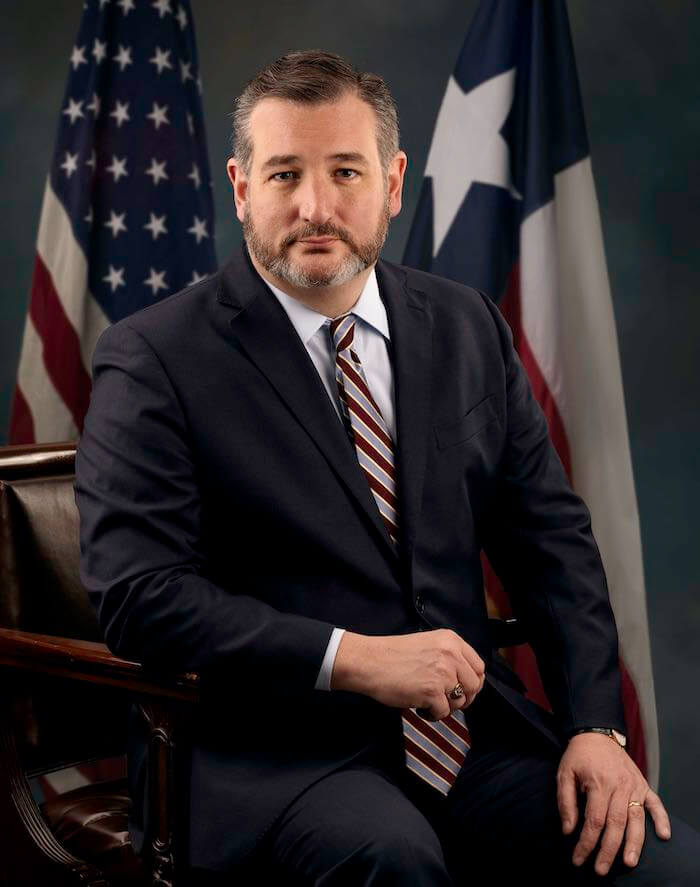
On January 16, Broadband Breakfast reported that Sen. Ted Cruz intends to introduce a joint resolution of disapproval in the Senate to overturn the FCC's July 2024 order granting subsidies for schools and libraries to loan out Wi-Fi hotspots for off-premises use. 

The expected joint resolution of disapproval will be filed under the Congressional Review Act (CRA), which provides a fast-track mechanism for Congress to repeal new agency rules. If passed by 119th Congress, the CRA joint resolution would go to the desk of President-elect Donald Trump for signature. Background on the CRA is provided in FSF Board of Academic Advisors' Member Daniel Lyons' June 2018 Perspectives from FSF Scholars, "The Congressional Review Act and the Toxic Politics of Net Neutrality."

The FCC's July 2024 order for subsidizing off-premises Wi-Fi is a good candidate for repeal under the CRA. As explained in my August 2024 Perspectives from FSF Scholars, "FCC Lacks Authority to Subsidize Wi-Fi Use Away from Schools and Libraries":

Section 254(h) of the Communications Act, on which the Commission relies, authorizes universal service subsidies only to or for "schools," "classrooms," and "libraries." Subsidies for off-premises Wi-Fi use – potentially anywhere in the world – are not included in the statute. The Commission's decision to spend taxpayer dollars without an overall budget cap for off-premises Wi-Fi use is unlawful. 

Thus, a joint resolution of disapproval to repeal the Commission's order is a rule of law measure. 


Additionally, Sen. Cruz and others have raised reasonable concerns about the Commission's order causing wasteful taxpayer expenditures and child Internet use in environments without adult supervision. The agency's approved subsidies would come from the E-Rate program, which is funded by universal service surcharges imposed on consumer bills for voice services. 


Thanks go to Sen. Cruz for his willingness to take action for government agency accountability, fiscal responsibility, and child safety. 

Friday, August 09, 2024

TMT with Mike O'Rielly – Ep 10: History, Present, and Future of the USF

Episode 10 of "TMT with Mike O'Rielly," a videocast featuring former FCC Commissioner and Adjunct Senior Fellow at the Free State Foundation Michael O'Rielly, was released on August 8. In this episode, titled "The History, Present, and Future of the Universal Service Fund," Mr. O'Rielly is joined by guest Dr. Harold Furchtgott-Roth, a former FCC Commissioner and currently Senior Fellow and Director for the Center for the Economics of the Internet at the Hudson Institute. 

Monday, March 18, 2024

State Court Rules that USAC is Tax-Immune in Lifeline Case

On March 7, the Washington State Supreme Court issued its decision in Assurance Wireless USA, LP v. State of Washington Department of Revenue (2024). At issue in the case is whether funds received by telecommunications carriers participating in the federal Lifeline program are subject to Washington's retail sales tax. In a unanimous 9-0 decision, the Washington Supreme Court concluded that because the Universal Service Administrative Company (USAC) operates as an instrumentality of the federal government, imposition of the retail sales tax violates the intergovernmental tax immunity doctrine. The effect of the court's decision is that it ensures that tax burdens are not saddled on Lifeline program providers and low-income beneficiaries.

The USAC is the FCC's appointed non-profit entity for administering the Universal Service Fund and the Lifeline program. The Washington Supreme Court determined that the USAC is the "buyer" from whom telecommunications carrier and Lifeline program participating provider Assurance Wireless should have been collecting the tax. That is to say, the court determined that the incidence of the state retail sales tax falls on the USAC.

Under the intergovernmental immunity doctrine, the federal government and instrumentalities closely connected to it are immune from all forms of taxation absent express Congressional waiver of immunity. The Washington Supreme Court determined that provisions contained in Section 254(e) and 254(f) of the Communications Act do not constitute Congressional waivers. Looking to factors identified in U.S. Supreme Court jurisprudence for determining whether an instrumentality is closely related to governmental activity and therefore tax-immune, the Washington Supreme Court wrote: 

Weighing all the factors, we conclude that USAC is an instrumentality of the federal government. It exists solely to carry out the FCC's mission of advancing universal service, which includes the Lifeline program, and USAC pursues no independent business objectives. Congress has acknowledged the FCC's reliance on USAC and approved of their relationship as the means of implementing universal service programs. Further, although USAC is nominally an independent nonprofit, the FCC's regulatory control over USAC's operations, leadership composition, and finances have produced an entity so closely related to the FCC that we conclude it operates as an instrumentality of the federal government for purposes of the intergovernmental tax immunity doctrine. 

In a November 9, 2024 FSF Blog post, "State Court Weighing USAC on Tax Immunity for Lifeline," I previewed this case. I suggested that Assurance Wireless USA had a stronger position on the tax immunity of the USAC. Former FCC Commissioners Robert McDowell and Mignon Clyburn were among those who filed amicus curiae briefs favoring tax immunity for the USAC. The effect of such immunity is that it better enables Lifeline to serve its programmatic purpose of providing telecommunications services to qualifying low-income individuals. 


Universal service reform and the Lifeline program were topics for discussion during the hot topics in communications law and policy panel at the Free State Foundation's 16th Annual Policy Conference held on March 12.


Video of that panel and former FCC Commissioner Mignon Clyburn in discussion with former Commissioner Mike O’Rielly and two current Commission members can be found on FSF's video web page. 

Saturday, May 06, 2023

Sixth Circuit Denies Nondelegation Challenges to USF Regime

On May 4, the U.S. Court of Appeals for the Sixth Circuit rejected nondelegation and private nondelegation challenges to Section 254 of the Communications Act. In Consumers' Research v. FCC, a three-judge panel for the Sixth Circuit held unanimously that the statutory framework regarding universal service that Congress provided the FCC in Section 254 "contains an intelligible principle because it offers nuanced guidance and delimited discretion to the FCC." Additionally, the court held that "[b]ecause of the [Universal Service Administrative Company's] subordination to the FCC and its assistance with fact gathering and ministerial support, there is no private non-delegation doctrine violation."

A similar legal defeat regarding nondelegation challenges to the administrative mechanism for funding universal service took place in the Fifth Circuit on March 24 of this year. Apparently, the decision in the Fifth Circuit is the subject of a pending petition for en banc review by the entire Fifth Circuit. Another case raising nondelegation challenges to Section 254 is still pending in the Eleventh Circuit. 

Friday, March 24, 2023

Fifth Circuit Denies Nondelegation Challenges to USF Regime

Today, March 24, a three-judge panel of the U.S. Court of Appeals for the Fifth Circuit denied constitutional challenges to the administrative regime for the Universal Service Fund. In Consumers' Research v. FCC, the Fifth Circuit rejected the claim that Congress improperly delegated authority to the Commission to administer the USF under Section 254 of the Communications Act. According to the court, Section 254 supplied the Commission with intelligible principles when it tasked the agency with overseeing the USF, and that the statute sufficiently limited the agency's power to raise revenues. Additionally, the Fifth Circuit ruled that the FCC's redelegation of authority to the USAC to administer the USF does not run afoul of the private nondelegation doctrine. According to the court, the USAC is subordinate to the Commission and the agency is not bound by USAC decisions. Instead, the Commission but can review the USAC's decisions and grant relief from them as well as determine how USF contributions are calculated and review the calculations made by the USAC.

As noted in an April 2022 blog post, President Randolph May and the Free State Foundation joined an amicus brief that was filed with the Fifth Circuit in this case. 


Although in Fifth Circuit appears to have made short work of nondelegation challenges to the USF in Consumers' Research v. FCC, there are nondelegation-related challenges to the scheme for administering the USF still pending in the Sixth and Eleventh Circuit Courts of Appeal. 

Friday, August 05, 2022

Debating the Constitutionality of the Universal Service System

For thoughtful discussion and debate about the constitutionality of the universal service's contribution system as currently operated by the FCC, consider checking out the July 19 webinar hosted by the Federalist Society, titled "Consumers' Research v. FCC and the Legality of the Universal Service Fund Contribution Regime." Video and audio of the event are both available online. The event features a very knowledgeable and experienced panel that ably present their cases. Although the webinar is focused on constitutional arguments about USF raised by the Consumers Research v. FCC case, including the non-delegation issue raised by Section 254 of the Communications Act, the panel discussion also touches on USF contribution policy reform.

As noted in an April 19 blog post, the Free State Foundation and FSF President Randolph May joined an amicus brief that was filed by Competitive Enterprise institute in the Consumers' Research case.  

FSF President Randy May also addressed constitutional issues regarding USF in his November 2021 Perspectives from FSF Scholars, "A Nondelegation Doctrine Challenge to the FCC's Universal Service Regime." Also check out our April 2021 Perspectives, "Congress Should Put Universal Service on a Firmer Constitutional Foundation." Also, I addressed USF contribution reform in my June 2022 Perspectives, "Congress Should Require Major Web Platforms to Support Universal Service."

Tuesday, April 19, 2022

Free State Foundation Files Brief Supporting Constitutional Challenges to USF Regime

On April 18, the Free State Foundation and FSF President Randolph May filed an amicus curiae brief in the Fifth Circuit Court of Appeals in a case challenging the constitutionality of the FCC's universal service regime. The amicus brief, which is led by the Competitive Enterprise Institute and includes other telecommunications and administrative law experts, argues that the imposition of the USF contribution fee by the FCC and the Universal Service Administrative Company violates the nondelegation doctrine and the major questions doctrine, both of which are central to maintaining the separation of powers required by the Constitution. The case is Consumers' Research v. FCC.  

Here are two key paragraphs from the amicus brief's introduction:

Only Congress has the power to lay and to collect taxes for the general welfare of all Americans. Regardless of the public policy that it seeks to advance, Congress cannot delegate this power to the FCC or any other executive branch agency. Yet that is exactly what Congress did when it enacted the Telecommunications Act of 1996 to create a universal service program for the Commission to raise revenue however it sees fit "for the protection of the public interest" in seeking to provide greater access to telecommunications services. 47 U.S.C. § 254(b)(7). 


The Constitution does not permit Congress to circumvent the legislative process by allowing an independent agency (guided by a private company owned by an industry trade group) to raise and to spend however much money it wants every quarter for "universal service" at the expense of every American who pays a monthly phone bill. Elected representatives of the people, not the Federal Communications Commission, must be responsible for making the difficult decisions to raise the revenue that funds this program. 

The amicus brief argues that the "contribution" mandated by Section 254 of the Communications Act is functionally a tax and that Congress's delegation of broad regulatory power to the Universal Service Administrative Company (USAC) – a private corporation – raises serious structural separation-of-power issues. As the brief states: 

The Company now rakes in nearly $10 billion each year in 'contributions' (ultimately borne by consumers), which it then disburses to libraries, schools, rural areas, and carriers providing services in high-cost areas... Yet Congress provided no direction as to how either the FCC or the Universal Service Administrative Company should calculate rates for service providers or how much money should be collected and distributed each year. 

As mentioned above, the amicus brief also argues that "[t]he major questions doctrine forecloses any interpretation of Section 254 that would allow the FCC to collect and to spend billions of dollars every year as it sees fit."


The amicus brief in Consumers' Research v. FCC is available for reading here. And thank you to the Competitive Enterprise Institute and their legal counsel. 


For more on the constitutional problems with the universal service regime, see FSF President Randy May's November 2021 Perspectives from FSF Scholars, "A Nondelegation Doctrine Challenge to the FCC's Universal Service Regime," as well as our April 2021 Perspectives, "Congress Should Put Universal Service on a Firmer Constitutional Foundation." Additionally, the Free State Foundation filed comments in February 2022 and reply comments in March of this year in the FCC's proceeding for its upcoming Report on the Future of the Universal Service Fund.