Showing posts with label Rule of Law. Show all posts

Friday, March 07, 2025

PRESS RELEASE: Eleventh Circuit's Vacation of Gray Television's Forfeiture Should Raise Caution Flags at FCC

Free State Foundation President Randolph May issued the following statement regarding the Court of Appeals for the Eleventh Circuit's opinion today vacating a forfeiture penalty of $518,283 assessed against Gray Television, Inc: 

The Free State Foundation filed an amicus brief in Gray Television's appeal of its forfeiture because of certain concerns relating the FCC's rationale for imposing the forfeiture, including whether Gray's due process rights had been violated for lack of fair notice regarding whether Gray's conduct actually violated the Commission's rules as they had been interpreted. While the court did not address the specific points FCC raised, it did hold that the entire
forfeiture should be vacated because the Commission failed to provide fair notice and acted arbitrarily and capriciously in failing to explain the basis for its Notice of Apparent Liability (NAL).


The FCC's enforcement regime has been plagued by problematic examples of overreach and abuse in the past, which is a major reason why FSF participated as an amicus in the Gray appeal. Before the agency is allowed to impose massive penalties, it's required as a matter of due process that parties regulated by the agency have fair notice of what's expected of them to comply with Commission rules. Conservatives and rule-of-law advocates have always been rightly concerned by "regulation by enforcement" – that is using an enforcement regime to establish new heretofore unknowable regulatory requirements.


The FCC's recent imposition of a massive forfeiture on Telnyx, and others, may well fall into this category, raising similar due process and fair notice concerns regarding whether the conduct alleged to be violative of the agency’s rules was known or knowable.

Friday, January 17, 2025

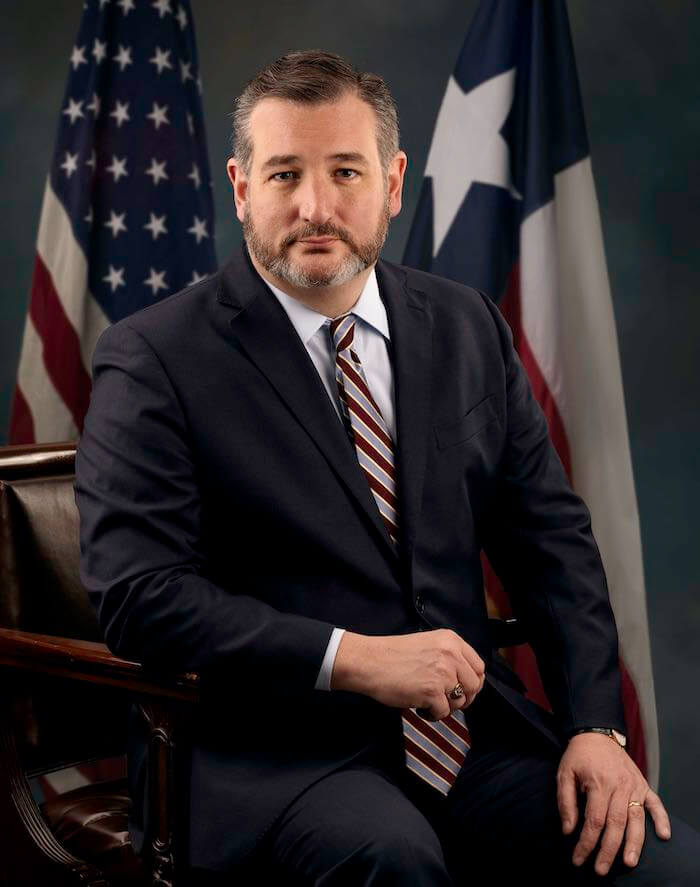
Senator Cruz to Intro Resolution to Repeal FCC's Off-Premises Wi-Fi Subsidies

On January 16, Broadband Breakfast reported that Sen. Ted Cruz intends to introduce a joint resolution of disapproval in the Senate to overturn the FCC's July 2024 order granting subsidies for schools and libraries to loan out Wi-Fi hotspots for off-premises use. 

The expected joint resolution of disapproval will be filed under the Congressional Review Act (CRA), which provides a fast-track mechanism for Congress to repeal new agency rules. If passed by 119th Congress, the CRA joint resolution would go to the desk of President-elect Donald Trump for signature. Background on the CRA is provided in FSF Board of Academic Advisors' Member Daniel Lyons' June 2018 Perspectives from FSF Scholars, "The Congressional Review Act and the Toxic Politics of Net Neutrality."

The FCC's July 2024 order for subsidizing off-premises Wi-Fi is a good candidate for repeal under the CRA. As explained in my August 2024 Perspectives from FSF Scholars, "FCC Lacks Authority to Subsidize Wi-Fi Use Away from Schools and Libraries":

Section 254(h) of the Communications Act, on which the Commission relies, authorizes universal service subsidies only to or for "schools," "classrooms," and "libraries." Subsidies for off-premises Wi-Fi use – potentially anywhere in the world – are not included in the statute. The Commission's decision to spend taxpayer dollars without an overall budget cap for off-premises Wi-Fi use is unlawful. 

Thus, a joint resolution of disapproval to repeal the Commission's order is a rule of law measure. 


Additionally, Sen. Cruz and others have raised reasonable concerns about the Commission's order causing wasteful taxpayer expenditures and child Internet use in environments without adult supervision. The agency's approved subsidies would come from the E-Rate program, which is funded by universal service surcharges imposed on consumer bills for voice services. 


Thanks go to Sen. Cruz for his willingness to take action for government agency accountability, fiscal responsibility, and child safety. 

Monday, January 06, 2025

Court Sets Aside FCC's New Title II Order

On January 2, the U.S. Court of Appeals for the Sixth Circuit issued a decision on the merits in MCP No. 185. The three-judge panel's decision set aside the FCC's 2024 Securing and Safeguarding the Open Internet Order. The court wrote:   

Using "the traditional tools of statutory construction," id., we hold that Broadband Internet Service Providers offer only an "information service" under 47 U.S.C. § 153(24), and therefore, the FCC lacks the statutory authority to impose its desired net-neutrality policies through the "telecommunications service" provision of the Communications Act, id. § 153(51).

The Sixth Circuit's decision in MCP No. 185 presents a straightforward reading of the Communications Act. It thus reaches a relatively easy conclusion that broadband Internet access services are best understood as fitting the definition of lightly regulated "information services" under Title I of the Act. This decision is welcome because it means that innovative broadband networks will remain free from unjustifiable public utility regulation that Congress never authorized. 


The Sixth Circuit's opinion is refreshing because it shows how the traditional tools of statutory interpretation can be used to resolve even seemingly technical questions like the regulatory classification of broadband. It's the type of decision that eluded us so long as lower courts were subject to the "Chevron doctrine" and effectively required to rationalize even far-fetched agency interpretations or re-interpretations of supposed ambiguous statutory provisions. 


The Sixth Circuit's commendable decision was made possible by the Supreme Court's overruling of the "Chevron doctrine" in its 2025 Loper Bright Enterprises v. Raimondo decision, which signaled a return to principles of judicial review based on the best reading of statutes rather than elastic deference to regulatory agencies. 


The August 2024 stay order issued by a different Sixth Circuit panel in an earlier stage of the litigation presented a persuasive analysis that the FCC's order is contrary to the Supreme Court's Major Questions Doctrine. However, the merits panel's decision that was issued on January 2 rightly takes a first-things-first approach by concluding the FCC's order exceeded the terms of the Communication Act. Recourse to the Major Questions Doctrine is unnecessary to reach that conclusion. 


P.S. In December 2023, the Free State Foundation filed public comments with the FCC opposing the agency's proposed Title II reclassification decision. And in January 2024, the Free State Foundation filed reply comments in the Commission's Securing and Safeguarding the Open Internet proceeding. Those comments and reply comments predated the Supreme Court's decision in Loper Bright. For a defense of the Loper Bright decision, see FSF President Randolph May's July 2024 Perspectives from FSF Scholars, "Chevron's Demise Re-Aligns Administrative State With Founders' Vision."

Tuesday, December 31, 2024

Chevron Undermined Legal Stability, Loper Bright Will Help Restore It

On December 27, Free State Foundation President Randolph May published "Demise of Chevron Deference Promotes Regulatory Certainty," a Perspectives from FSF Scholars. In the Perspectives, President May defended the Supreme Court’s June 2024 decision in Loper Bright Enterprises v. Raimondo – which overturned the "Chevron doctrine" – against the claim that the decision would undermine stability or certainty in the law and undermine economic activity such as that private investment. 

In reality, the "Chevron doctrine" that required courts to defer to agency interpretations of statutory terms claimed to be ambiguous created a tremendous lack of stability and uncertainty in the law. 


To reinforce the points made in President May's Perspectives, the opinion of the court in Loper Bright is worth quoting: 

Nor has Chevron been the sort of "'stable background' rule" that fosters meaningful reliance. Post, at 8, n. 1 (opinion of KAGAN, J.) (quoting Morrison v. National Australia Bank Ltd., 561 U.S. 247, 261 (2010)). Given our constant tinkering with and eventual turn away from Chevron, and its inconsistent application by the lower courts, it instead is hard to see how anyone-Congress included-could reasonably expect a court to rely on Chevron in any particular case. And even if it were possible to predict accurately when courts will apply Chevron, the doctrine "does not provide 'a clear or easily applicable standard, so arguments for reliance based on its clarity are misplaced.'" Janus, 585 U.S., at 927 (quoting South Dakota v. Wayfair, Inc., 585 U.S. 162, 186 (2018)). To plan on Chevron yielding a particular result is to gamble not only that the doctrine will be invoked, but also that it will produce readily foreseeable outcomes and the stability that comes with them. History has proved neither bet to be a winning proposition.


Rather than safeguarding reliance interests, Chevron affirmatively destroys them. Under Chevron, a statutory ambiguity, no matter why it is there, becomes a license authorizing an agency to change positions as much as it likes, with "[u]nexplained inconsistency" being "at most . . . a reason for holding an interpretation to be . . . arbitrary and capricious." Brand X, 545 U.S., at 981. But statutory ambiguity, as we have explained, is not a reliable indicator of actual delegation of discretionary authority to agencies. Chevron thus allows agencies to change course even when Congress has given them no power to do so. By its sheer breadth, Chevron fosters unwarranted instability in the law, leaving those attempting to plan around agency action in an eternal fog of uncertainty. Chevron accordingly has undermined the very "rule of law" values that stare decisis exists to secure. Michigan v. Bay Mills Indian Community, 572 U.S. 782, 798 (2014).

In his Perspectives, President May included a brief quotation from Justice Neil Gorsuch's concurring opinion in Loper Bright. A fuller quotation is also worth reading:  

Far from engendering reliance interests, the whole point of Chevron deference is to upset them. Under Chevron, executive officials can replace one "reasonable" interpretation with another at any time, all without any change in the law itself. The result: Affected individuals "can never be sure of their legal rights and duties." Buffington, 598 U.S., at__ (slip op., at 12).


How bad is the problem? Take just one example. Brand X concerned a law regulating broadband internet services. There, the Court upheld an agency rule adopted by the administration of President George W. Bush because it was premised on a "reasonable" interpretation of the statute. Later, President Barack Obama's administration rescinded the rule and replaced it with another. Later still, during President Donald J. Trump's administration, officials replaced that rule with a different one, all before President Joseph R. Biden, Jr.'s administration declared its intention to reverse course for yet a fourth time. See Safeguarding and Securing the Open Internet, 88 Fed.Reg. 76048 (2023); Brand X, 545 U.S., at 981-982. Each time, the government claimed its new rule was just as "reasonable" as the last. Rather than promoting reliance by fixing the meaning of the law, Chevron deference engenders constant uncertainty and convulsive change even when the statute at issue itself remains unchanged.


Nor are these antireliance harms distributed equally. Sophisticated entities and their lawyers may be able to keep pace with rule changes affecting their rights and responsibilities. They may be able to lobby for new "'reasonable'" agency interpretations and even capture the agencies that issue them. Buffington, 598 U.S., at__,__ (slip op., at 8, 13). But ordinary people can do none of those things. They are the ones who suffer the worst kind of regulatory whiplash Chevron invites.

Notably, Justice Gorsuch's concurring opinion in Loper Bright identified the FCC's flip-flopping on the regulatory classification status of broadband Internet access service under the Court's 2005 NCTA v. Brand X Internet Services decision as a prime example of how the “Chevron doctrine” warped the rule of law and undermined legal certainty.  The legal challenge to the FCC's decision to reclassify broadband Internet services as a Title II "telecommunications service" and subject it to public utility regulation is presently before the Sixth Circuit, and a decision is expected in 2025.


Chevron enabled Administrations to twist and abuse the law. Thankfully, the decision in Loper Bright ends the Court's runaway experiment with regulatory agency supremacy in statutory interpretation and brings those issues back within the wheelhouse of the judicial branch.  

Thursday, December 26, 2024

2025 Will Be a Big Year for the FCC in the Courts

On December 16, the Federalist Society hosted a webinar panel event, "Is FTC Administrative Litigation Unconstitutional?" The webinar's panelists discussed the future of Federal Trade Commission's (FTC) litigation and enforcement in light of the Supreme Court's decisions in Axon Enterprise, Inc. v. FTC (2023) and SEC v. Jarkesy (2024) as well as in light of the Court's openness to revisit the contours of administrative power as reflected by decisions such as West Virginia v. EPA (2022) and Loper Bright Enterprises v. Raimondo (2024).

In Jarkesy, the Court held that the Seventh Amendment entitles a defendant to a jury trial when the Securities and Exchange Commission (SEC) seeks civil penalties for securities fraud. The Court determined that the SEC's antifraud provisions replicate common law fraud claims that must be heard by a jury. 


Although the Supreme Court's holding in Jarkesy was limited to the Seventh Amendment, the FedSoc webinar panel's discussion touched on two facets of the Fifth Circuit's holding in an earlier stage of the case. The Fifth Circuit held that Congress unconstitutionally delegated legislative power to the SEC by failing to provide an intelligible principle by which the SEC would exercise delegated power, thereby violating the U.S. Constitution's Article I Legislative Vesting Clause. Additionally, the Fifth Circuit held that statutory removal restrictions on SEC Administrative Law Judges (ALJs) violate the Take Care Clause of Article II. Shortly, the Supreme Court will likely tackle nondelegation claims, presidential removal power claims, and other claims brought in other cases against the FTC or other agencies – including the FCC.


Indeed, in 2025, the Supreme Court will review the Fifth Circuit's July 2024 en banc decision in Consumers' Research v. FCC. The Fifth Circuit concluded that the universal service contribution system violates the Article I Legislative Vesting Clause. The Court's grant of a writ of certiorari in Consumers' Research v. FCC is noted briefly in my blog post from November 26, 2024. The lower court's decision in the case, which was based on nondelegation principles and precedents, is the subject of my August 2024 Perspectives from FSF Perspectives, "Fifth Circuit Rules USF Contribution Scheme Violates Legislative Vesting Clause."


Furthermore, lower courts are likely to weigh in next year on Jarkesy implications for the FCC's enforcement authority. In April 2024, the FCC fined the three nationwide wireless providers for the sale of consumer location-related information. Legal challenges to the Commission's authority to levy those fines are now pending before the D.C. Circuit, the Second Circuit, and the Fifth Circuit. 


Added to all of these pending cases are anticipated judicial decisions about the legal fate of the FCC's Safeguarding and Securing the Open Internet Order regulating broadband Internet services as public utilities and the Commission'sDigital Discrimination Order subjecting broadband providers to liability for unintentional disparate impacts. Oral arguments in those respective cases have been held before the Sixth Circuit and the Eighth Circuit


In all, it looks like 2025 will be a big year for the FCC in the courts.   

Tuesday, November 05, 2024

Court Hears Arguments on Challenge to School Wi-Fi Bus Subsidies

 On November 4, oral arguments were held before the U.S. Court of Appeals for the Fifth Circuit in the case of Molak v. FCC. The case involves a legal challenge to the Commission's October 2023 School Bus Wi-Fi Order. The Petitioners, represented by David A. Suska during oral arguments, claim that the agency lacks authority under Section 254 of the Communications Act to use E-Rate funds to subsidize Wi-Fi on school buses. 

By a declaratory ruling passed on a 3-2 vote of the Commission's members, the agency is interpreting the law to effectively extend the Emergency Connectivity Fund (ECF) beyond its sunset date of June 2024. The ECF was a $58.2 billion subsidy program for subsidizing Wi-Fi hotspots and broadband services for school buses and off-campus connectivity. The program was authorized under the American Rescue Plan Act of 2021 (ARPA) as a lockdown-era emergency measure. Section 7402 of the ARPA expressly authorized subsidies for supporting "eligible equipment" and advanced telecommunications and information services for use by students, school staff, and library goers "at locations that include locations other than the school" and "other than the library."


In our February 2024 Perspectives from FSF Scholars, "FCC's School Bus Wi-Fi Subsidy Lacks Statutory Support," Free State Foundation President Randolph May and I addressed legal problems with the School Bus Wi-Fi Order. Section 254 of the Communications Act is more limited than Section 7402 of the ARPA. Section 254(h)(1)(B) authorizes the Commission to provide subsidy support to telecommunications carriers for "services to elementary schools, secondary schools, and libraries for educational purposes." And Section 254(h)(2)(A) directs the Commission to adopt competitively neutral rules to enhance "access to advanced telecommunications and information services for all public nonprofit elementary and secondary school classrooms, health care providers, and libraries." In short, we concluded that the FCC overreached in subsidizing school bus Wi-Fi subsidies under Section 254 because buses are notschools, classrooms, or libraries – and schools are not telecommunications carriers. 


Before the Fifth Circuit, Mr. Suska ably argued that the School Bus Wi-Fi Order exceeded the law in four ways: (1) by making subsidies available to anyone, not just telecommunications carriers; (2) by making subsidies available for any kind of service, not just telecommunications services; (3) by making subsidies available for equipment, which is not in the statute; and (4) by providing subsidies to schools instead of telecommunications carriers.  


On behalf of the FCC, Ms. Rachel Proctor May argued: "The word 'classroom' is best interpreted to include buses that have been outfitted with Wi-Fi so they can serve as rolling study halls." That type of elastic interpretation might have sufficed under the old "Chevron doctrine." But that is a decidedly strained and result-driven interpretation by the FCC, and one the agency cannot rely on for its authority now that the Supreme Court's decision in Loper-Bright v. Raimondo has overruled Chevron. Moreover, it goes against human experience to think that anything but the tiniest amount of homework will take place on Wi-Fi-connected school buses. No claimed agency technical expertise about imagined homework on school buses ought to rescue the FCC from the overreach of its School Bus Wi-Fi Order


A significant portion of the oral arguments before the court addressed threshold procedural issues regarding exhaustion of administrative remedies and standing. Yet if the Fifth Circuit rules on the merits, there is a strong likelihood that the court will vacate the FCC's School Bus Wi-Fi Order. 

Wednesday, September 04, 2024

Lawsuit Challenges FCC Order Subsidizing Wi-Fi Away from Schools and Libraries

On August 29, a petition was filed in the U.S. Court of Appeals for the Fifth Circuit that challenges the legal basis for the FCC's July 2024 Off-Premises Wi-Fi Order. The petition filed in Molak v. FCC states that the Commission's order "unlawfully expands the FCC’s E-Rate Program to subsidize Wi-Fi service and equipment anywhere students might go." E-Rate is part of the Universal Service Fund (USF), which is funded by surcharges – functional taxes – paid each month by voice consumers. The petition alleges that the order’s increase in E-Rate Program outlays will directly increase USF surcharges that the petitioners pay each month. It also alleges that subsidizing Wi-Fi use away from school premises "enabl[es] unsupervised social-media access by children and teenagers."

The unlawfulness of the Commission's Off-Premises Wi-Fi Order is the subject of my August 20 Perspectives from FSF Scholars, "FCC Can't Subsidize Wi-Fi Use Away from Schools and Libraries." As explained therein, Section 254(h) of the Communications Act, the statutory provision that provides the legal basis for the E-Rate Program and upon which the Commission relies for its order, authorizes universal service subsidies only to or for "schools," "classrooms," and "libraries." But subsidies for off-premises Wi-Fi use – potentially anywhere in the world – are not included in the statute.


Moreover, the legal challenge to the Off-Premises Wi-Fi Order in Molak v. FCC parallels a prior legal challenge with an identical case name that was filed in the Fifth Circuit last year against the Commission's 2023 School Bus Wi-Fi Order. The prior agency order authorized universal subsidies for Wi-Fi equipment and service on school buses. The unlawfulness of the prior order is the subject of a February 2024 Perspectives from FSF Scholars by Free State Foundation President Randolph May and I, titled "FCC's School Bus Wi-Fi Subsidy Lacks Statutory Support."


In both Molak v. FCC cases, the petitioners raise important issues about agency accountability to the law and to the American public. The outcome of these pending legal challenges to administrative agency overreach will have implications for responsible spending of precious dollars collected from the public and for child online safety.

Wednesday, January 20, 2021

FCC's General Counsel Sums Up Commission's Courtroom Successes

At the FCC's public meeting on January 13, the Commission's General Counsel Thomas Johnson presented on the accomplishments of the Office of the General Counsel during the past four years. As General Johnson sums things up in his presentation:  

Our Litigation team… won in whole or in substantial part 28 out of 31 appeals (or 90%) filed against the agency. We achieved these results despite being challenged on several of this administration's highest-profile items. When we restored a light-touch regulatory framework to broadband in the Restoring Internet Freedom Order, we were challenged in court. Yet, after our defense of the Order—in which I participated in a marathon 5 1⁄2 hour oral argument on a snowy February day following a government shutdown—the D.C. Circuit upheld our reclassification of broadband as a Title I information service. When we modernized our approach to state and local infrastructure siting requirements to accelerate American leadership in 5G deployment, we were challenged in court. But after no fewer than three of my attorneys defended our 5G infrastructure orders before the Ninth Circuit, the court upheld nearly all of our reforms. When we took an innovative and thoughtful approach to reallocating critical "C-Band" spectrum for 5G services, we again were challenged in court. But the D.C. Circuit in short order rejected all legal challenges to our C-Band Order, clearing the way for a record-breaking auction of the spectrum. 

Slides of the presentation are available here.


Prior FCC administrations have had notably less success in defending their policy agendas in court. The Commission's legal victories during the last four years demonstrates Chairman Ajit Pai's commitment to the rule of law as well as the able advocacy of General Johnson and his team. Congratulations to General Johnson and the Office for a job well done. 

Thursday, February 13, 2020

Richard Epstein Previews Book on "The Dubious Morality of the Administrative State"

The Regulatory Transparency Project's "Deep Dive" Podcast #87 features a talk by Prof. Richard Epstein on "The Dubious Morality of Modern Administrative Law." Prof. Epstein's talk highlights themes from his book of that same title, to be published in March 2020. The event took place at UC Berkeley and featured a response by Prof. Daniel Farber. Prof. Epstein has written several incisive and provocative books on law and regulation. And based on his recent remarks at UC Berkeley, "The Dubious Morality of Modern Administrative Law" will surely be another important book worth reading. Prof. Epstein a Distinguished Adjunct Senior Scholar at the Free State Foundation.

Monday, May 23, 2016

New Paper in Federalist Society Review Calls for FCC Process Reform

Today, Free State Foundation President Randolph May and Senior Fellow Seth Cooper published a paper in the Federalist Society Review entitled “The FCC Threatens the Rule of Law: A Focus on Agency Enforcement and Merger Review Abuses.” Mr. May and Mr. Cooper discuss the FCC’s general conduct standard, established in the February 2015 Open Internet Order, and its inconsistency with due process and rule of law principles. They also question a few recent enforcement actions by the FCC and discuss why the regulated companies often are better off settling than going to court, even when it is not clear that the company violated FCC regulations.
The paper also criticizes the FCC’s merger review process and the Commission’s actions to “regulate by condition” in a way that imposes different regulatory mandates on similarly situated market participants. If the FCC does not reform its merger review process soon, Mr. May and Mr. Cooper suggest that Congress pass FCC reform legislation that includes merger review provisions.

“The FCC and the Rule of Law” was the theme of FSF’s Eighth Annual Telecom Policy Conference. 
The Rule of Law panel and transcript provide more insight into the need for process reform at the FCC.

Thursday, March 10, 2016

Agenda Released for FSF's Annual Telecom Policy Conference

Today, the agenda for the Free State Foundation’s Eighth Annual Telecom Policy Conference, “The FCC and the Rule of Law,” was released. The conference will take place at the National Press Club in Washington, DC on March 23, 2016 from 8:45 am to 2:45 pm.
Registration is complimentary, including continental breakfast and lunch, but you must register to attend. Register now here!

Monday, November 02, 2015

FCC Must Transition Away From Roadblocks to All-IP Networks

The point of the FCC's Technology Transitions proceeding supposedly is to speed up migrations from legacy narrowband services to Internet Protocol-based broadband services. But the Commission's proposed Tech Transitions regulations miss that point completely. If adopted, they would erect new roadblocks to broadband deployment. Truly, the Commission needs to transition itself away from such a counterproductive proposal.
The Commission is taking public comments on proposed rules that would make it harder for transitioning providers to discontinue operating copper-based legacy voice networks. In essence, the Commission plans to put the burden on providers to justify discontinuation of legacy networks and replacing them with services using new advanced technologies.
Prolonging operations for increasingly costly and outdated networks diverts resources better allocated to all-IP networks. Bureaucratic costs and delays in broadband upgrades will be consequences of the Commission’s proposed transition rules. Further, competitive conditions in the voice services market make burdensome Tech Transitions rules unnecessary. As discussed below, consumers overwhelmingly have access to wireless and IP-based alternatives to copper-based switched access lines. And the Commission's Section 214 authority concerning discontinuation of voice services doesn’t authorize detailed regulation of broadband network capabilities.
If the Commission really wants to streamline and speed up tech transitions, it should settle on a simpler approach that is keyed to existing market realities. The Commission should adopt deregulatory presumptions in the Tech Transitions proceeding. Given the widespread consumer adoption of VoIP and wireless services, the Commission should presume that VoIP and wireless are adequate substitutes for legacy networks. Upon filing an application, the Commission should allow voice providers to discontinue old copper-based voice services unless there is clear and convincing evidence that no adequate substitute is available in a given area.
As indicated, there are at least three serious problems with the Commission's proposed Tech Transitions regulations.
First, the Commission's proposed rules will slow broadband deployments and upgrades. If adopted, its restrictive procedural hurdles on discontinuing copper-based services will impose unnecessary costs and delays on tech transitions. The Commission already has a process for discontinuing voice services under Section 214. When voice providers request discontinuation of services, the Commission weighs five factors: (1) financial impact on the provider of continuing to offer services; (2) need for the service in general; (3) need for the particular facilities in question; (4) existence, availability, and adequacy of alternatives; and (5) increased charges for alternative services. Section 214 applications are nearly always granted as a routine matter.
The Commission now proposes to bog down the existing Section 214 process. Under the Commission's proposal, providers seeking to discontinue retail voice services and replace them with services "based on a newer technology" must show that its new service – or services available from other providers – satisfy additional requirements. The proposed requirements involve: (1) network capacity and reliability; (2) service quality; (3) device and service interoperability; (4) service for individuals with disabilities; (5) PSAP and 9-1-1 service; (6) cybersecurity; (7) service functionality; and (8) coverage. These requirement are directed specifically to incumbent local exchange carriers (ILECs).
Of course, if anyone objects to the transitioning provider’s application, the Commission's proposal states: "[T]he carrier would be required to submit information demonstrating the degree to which it meets or does not meet each factor." In other words, the Commission proposes putting the burden on providers transitioning to all-IP network services.
Assembling detailed information and organizing the paperwork involved will doubtless drag out the transition to all-IP networks. It will certainly impose regulatory compliance costs on providers, tying up resources better spent deploying broadband networks. Moreover, the Commission's proposal will result in unnecessary duplication. Voice providers will continue to be required to maintain two separate networks to perform the same end-user services. And increasingly expensive replacement parts are needed to maintain legacy network operations. Here also, pouring financial resources into outdated networks to satisfy regulatory requirements means reducing investment in next-generation services.

Second, competitive marketplace conditions make burdensome new regulatory requirements on tech transitions unnecessary. Consumers today have real choices among service providers, undermining the need for stringent regulations. Earlier in the Tech Transitions proceeding, the Commission expressly observed that three-fourths of voice subscribers use Voice-over-the-Internet Protocol (VoIP) and wireless. Continuing steep declines in switched access lines have been widely recognized. According to the Local Telephone Competition Report (2014), “[i]n December 2013, there were 85 million end-user switched access lines in service, 48 million interconnected VoIP subscriptions, and 311 million mobile subscriptions.” Between 2010 and 2013, VoIP subscriptions increased at a compound annual growth rate of 15% while switched access lines declined 10% annually. Cable operators are now nationwide providers of VoIP services. And over 45% of households rely exclusively on wireless for voice services.
These trends in technological migration and consumer adoption presumably are a critical part of the Tech Transitions proceeding's reason for being. They also render the Commission's proposal for Tech Transitions regulations needless. If imposed, the result would be burdensome requirements on a single ILEC, when consumers would likely have access to competing wireless and cable providers of voice services.
Third, there is a serious rule of law problem with the Commission's proposed rules. The Commission doesn't appear to have the authority to impose them. The purpose of Section 214 is to make sure communities have access to voice services. Section 214 is not a source of power for regulating the details of broadband service deployments or upgrades. But the Commission's proposed requirements for replacing legacy voice services with "a newer technology" delve into technical capabilities of all-IP networks. That goes far beyond basic Section 214 requirements for discontinuing voice services.
Instead of imposing regulations that will slow tech transitions, the Commission should take a simpler approach that is tied to the realities of today’s marketplace. There is widespread consumer adoption of VoIP and wireless services. There is also competition to ILECs from wireless and cable VoIP providers, offering real choices to consumers. The Commission should therefore adopt a deregulatory presumption to govern the Tech Transitions process. In particular, it should presume that VoIP and wireless are adequate substitutes for old copper networks. Upon filing and application, the Commission should allow voice providers to discontinue copper-based voice services within a short timeframe absent actual compelling evidence that no adequate substitute is available in a given area.
A pro-market approach in the Tech Transitions proceeding based on deregulatory presumptions will reflect existing competitive choices. It will actually facilitate such deployment of all-IP networks rather than impede them. And, finally, it will conform to rule of law norms by not over-stretching the common understanding of the Commission's authority under the Communications Act.

Friday, October 23, 2015

FCC's Internet Privacy Power Grab Unsupported by Law

The Federal Communications Commission is trying to deputize itself as the nation’s Internet data privacy cop. An October 9 letter by Rep. Marsha Blackburn and 13 other members of Congress calls out the Commission's aspirations to become the federal privacy regulator for the Internet. Indeed, Congress never gave the FCC such broad powers. 
This absence of legal authority makes the FCC the rogue cop of data privacy. The FCC’s unauthorized foray into data privacy poses a real rule of law problem. In fact, it's a problem that is snowballing: The FCC asserts data privacy authority through its Open Internet Order (2015); its TerraCom Order (2015) proposed  $10 million in data privacy fines against two telecommunications providers despite the lack of any rules on the books; and a recent Lifeline order imposes data privacy mandates. The FCC's overreach also encroaches on the jurisdiction of the Federal Trade Commission (FTC), an agency with a broader expertise in addressing consumer privacy issues.
Congress is responsible for reining in the FCC and keeping it within the limits of its delegated powers. It is also Congress's responsibility to make sure that clear jurisdictional lines separate the FCC and the FTC. It should be the duty of Congress to decide which agency, if any, has jurisdiction over data privacy. Indeed, if new data privacy authority is contemplated, the FTC should be the common enforcer of simple, clear standards to be consistently applied to all digital platforms.
The FCC bases its claims of authority over data privacy on Section 222. In its Open Internet Order (2015), the FCC reclassified broadband Internet services as Title II common carrier telecommunications services. (This reclassification of broadband is now being challenged in court.) Under that Order, the FCC now applies Section 222 to broadband Internet service providers.
On May 20, 2015, the FCC issued an enforcement advisory on data privacy. The agency has also invoked its self-proclaimed powers over digital privacy in other orders. Its TerraCom Order proposed a hefty $10 million in fines against TeraCom, Inc. and YourTel America, for a data breach involving personal identifiable information (PII). And in the universal service context, FCC insisted in its Lifeline Modernization Order (2015) that subscriber PII falls within its enforcement jurisdiction. The Commission is now weighing a petition seeking reconsideration of that order's data privacy mandates.
Data breaches are very serious, but so are limits on agency jurisdiction. Over the last several years, numerous data breach laws have been passed by state legislatures. And many data breach bills have been introduced and been the subject of hearings in Congress. It strains credulity to believe that the lawmaking process can be so easily short-circuited by a sector-specific agency like the FCC claiming to have possessed such broad data privacy powers all this while.
By its terms, Section 222 is limited to customer proprietary network information (CPNI) in the voice communications context. Specifically, CPNI addresses telecommunications providers' collection and use of individualized consumer data regarding the time and length of calls, phone numbers called, and consumer voice billing. (FCC jurisdiction with respect to cable subscriber privacy and DBS subscriber privacy are also circumscribed under Section 551 and Section 338 of the Satellite Home Viewing Improvement Act, respectively.) CPNI is a different and narrower category than PII.
Aside from questions about over-reaching its Commission’s legal authority, applying Section 222 to broadband Internet service providers is bad policy. As FSF President Randolph May and I have previously explained, "Any New Privacy Regime Should Mean An End To FCC Privacy Powers." If a new federal privacy regime is really called for, it should be up to Congress to make that call. And if Congress so decides, transferring all privacy jurisdiction over communications and information services from the FCC to the FTC is the much preferred policy course.
The old lines differentiating products, services, and provider roles make little sense in today's digital, IP-based converging communications market. And it's unreasonable to think consumers expect privacy protections that differ when data is handled by a mobile broadband service provider or a media content company or applications provider. Transferring all privacy jurisdiction over CPNI from the FCC to the FTC would give consumers a simpler set of privacy expectations.
Making the FTC the common enforcer of common standards would also make compliance easier for providers or companies handling data. It would reduce the likelihood that certain types of information collectors would be unfairly disadvantaged without good cause by being subject to different privacy requirements.

Any data privacy policy change by Congress would be far down the road. The immediate rule of law issue is the FCC effectively changing data privacy policy by administrative fiat. Absent Congress keeping the FCC within bounds of its limited authority over CPNI data, federal courts will have to hold the agency to the rule of law.

* Information concerning the fine proposals and number of providers involved has been corrected (7:20AM 10/23/15)