Episode 19 of "TMT with Mike O'Rielly," a videocast featuring former FCC Commissioner and Adjunct Senior Fellow at the Free State Foundation Michael O'Rielly, was released on April 2. In this episode, titled "The Free State Foundation's Seventeenth Annual Policy Conference," Mr. O'Rielly has a conversation at #FSFConf17 with guests FTC Commissioner Melissa Holyoak, FCC Commissioner Nathan Simington, and former FCC Chairman Ajit Pai. Their conversation ranges a number of communications, competition, and administrative agency-related topics. Streaming video of the episode is now available:
Showing posts with label FCC Chairman Ajit Pai. Show all posts
Showing posts with label FCC Chairman Ajit Pai. Show all posts
Friday, April 04, 2025
TMT with Mike O'Rielly – Ep 19: Keynote Convo at FSF's 17th Annual Conference


Thursday, February 27, 2025
Former FCC Chairman Ajit Pai a Keynoter at FSF's 17th Annual Conference March 25!

Keynote Speaker Announced!

Former Chairman, Federal Communications Commission,
and Partner, Searchlight Capital
Previously Announced Keynoters
WHAT: FSF's Seventeenth Annual Policy Conference
WHERE: National Press Club, Washington, DC
WHEN: Tuesday, March 25, 2025 -- 8:30 a.m. - 2:30 p.m.
The Free State Foundation will hold its Seventeenth Annual Policy Conference on March 25, 2025, at the National Press Club in Washington, DC. This annual conference is acknowledged to be one of the nation's premier law and policy events.
As always, a truly outstanding lineup of senior officials and prominent experts from the FCC and Congress, and from other government agencies, industry, academia, and think tanks will discuss and debate the most important communications and Internet policy issues of the day, as well as other topical law and policy issues involving free market competition, free speech, and the rule of law.
With a new Trump administration, a new Congress, and new leadership at the FCC, FTC, and other agencies, this promises to be one of the most impactful of FSF's annual conferences.
REGISTRATION IS COMPLIMENTARY, INCLUDING CONTINENTAL BREAKFAST AND LUNCH.
BUT YOU MUST REGISTER TO ATTEND.
FOR ADDITIONAL INFORMATION, CLICK HERE.
REGISTER HERE!
#FSFConf17
Friday, June 07, 2024
TMT With Mike O’Rielly – Ep 3: Private Equity & Federal Broadband Funding
Episode 3 of the videocast TMT With Mike O'Rielly was released on June 4. It features a discussion between former FCC Commissioner O'Rielly and former FCC Ajit Pai. Be sure to check out their discussion of the private capital investment in broadband, the impact of rate regulation on investment, and broadband subsidies under the RDOF and BEAD Programs.
Wednesday, May 26, 2021
FCC Followed a Careful Process in Approving Wireless L-Band Services
In April 2020, the FCC approved the use of 30 MHz of valuable L-Band spectrum for commercial wireless services, including 5G services. This will boost the U.S. economy and our nation's standing in the race for 5G global leadership. Now disgruntled parties who want to delay or undo the L-Band Order are badmouthing it. But their attacks on the agency process that preceded the approval are easily shown to be untrue.
In its L-Band proceeding, the FCC followed the law and engaged its engineering expertise on spectrum interference issues. The Commission's carefully balanced order will promote innovation, investment, and jobs while providing safeguards for GPS services in nearby spectrum bands.
On a 5-0 bipartisan vote, the FCC authorized Ligado Networks to deploy a mixed mobile-satellite network using licensed L-Band spectrum that previously has gone unused. Ligado is pursuing opportunities for private network services. According to the L-Band Order, Ligado plans to invest up to $800 million in network capabilities, which could create over 8,000 jobs. In February 2021, Ligado announced its collaboration with Rakuten Mobile to co-develop 5G private network solutions for critical infrastructure industries such as energy, utilities, healthcare, and agriculture.
As Ligado Networks moves forward with its innovative network plans, its opponents are trying to nitpick the FCC's process leading up to the L-Band Order. For instance, op-eds by Diana Furchtgott-Roth published in April and May of this year rehash attacks on the L-Band proceeding. The most fanciful criticisms of the proceeding were originally made by Sen. James Inhofe in a May 2020 floor speech. Sen. Inhofe claimed that the Commission's process amounted to "a hasty decision" suddenly made "in the darkness of a weekend." Others, including Ms. Furchtgott-Roth, subsequently quoted Sen. Inhofe's wild claims for purposes of attacking the L-Band Order. However, it's a ghost story, not reality.
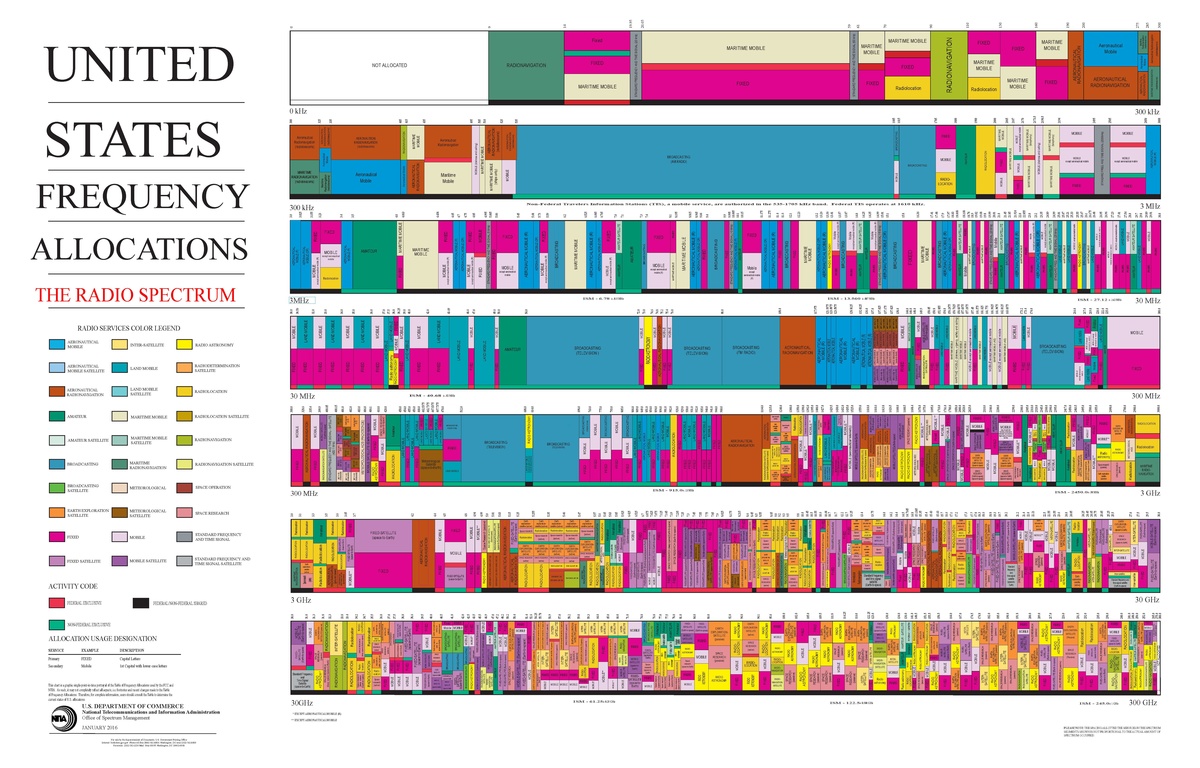
Furthering the ghost story version of events, Ms. Furchtgott-Roth's op-eds call the L-Band Order "ill-advised" and "inexplicable." Not so. The FCC was ably advised by the agency's Office of Engineering and Technology. The Commission's staff engineers duly considered submissions from federal agencies and all interested parties, conducting a careful analysis of alleged or potential signal interference issues. For instance, the Commission was unpersuaded by certain executive agency claims about possible signal interference with military devices operating outside of their assigned spectrum band.
Executive branch agencies may be unhappy that the FCC didn't agree with their views. But the Commission has the legal responsibility and the expertise to address conflicting views about commercial spectrum usage, and the agency relied on that expertise to make its decision.
In a January 2021 address to the Information Technology Industry Council, then-FCC Chairman Ajit Pai cut to the chase about federal agency disagreements on spectrum use and overheated claims that aren't backed up by hard facts:
[A]rguably the biggest thing hampering efforts to use spectrum more efficiently is – our own government. On proceeding after proceeding, we saw that other federal agencies tried to throw up roadblocks. Rather than look out for the public interest, many agencies were looking out for their narrow parochial interest. And since most don't have in-house spectrum expertise, they ended up simply parroting the exaggerated, hysterical, and often outright false claims being made by the industries they regulate. To achieve their aims, they ended up bypassing normal channels and complaining to Congress or the media in an effort to block or delay efforts to free up spectrum for commercial use.
Among the highly dubious claims called out by Chairman Pai, throw in Ms. Furchtgott-Roth's that "the entire GPS system is endangered" by the L-Band Order.
The deliberative process undertaken by the FCC is a reflected in the L-Band Order's specifics to for safeguarding GPS services. Rather than give Ligado Networks a free pass, the Commission imposed significant conditions on L-Band usage to avoid potential signal interference with incumbents in adjacent spectrum bands. Ligado negotiated agreements with major GPS equipment manufacturers for resolving signal interference concerns. The Commission incorporated those agreements into the L-Band Order, making them enforceable by the agency. Also, the Commission required Ligado to establish a 23 megahertz guard-band, lower base station power levels 99% compared to Ligado's 2015 proposal, and replace any government GPS devices that experience harmful interference. And Ligado must be able to shut off its network within 15 minutes of any request by the Commission.
In January of this year, the newly-constituted FCC rightly rejected an NTIA petition to stay the L-Band Order. Ligado Networks' 5G endeavors ought to be encouraged, not hindered. The careful process undertaken by the Commission should instill confidence in the agency's decision to green light wireless services in the L-Band. And resort by opponents to easily disprovable criticisms of the agency's process also boost confidence in the resulting order.
(For more on this subject, see the May 2020 Perspectives from FSF Scholars paper by Free State Foundation President Randolph J. May and I titled: "FCC's Order Approving Ligado's Next-Gen Wireless Network: A Deliberative Process that Protects Against Signal Interference.")
Friday, January 15, 2021
Chairman Pai Offers Incisive Remarks on U.S. Spectrum Policy
For an excellent overview of the FCC's progress putting spectrum into commercial use during Chairman Ajit Pai's tenure, look no further than his remarks to the Information Technology Industry Council (ITI) on January 14. He also addresses the future of American spectrum policy.

When I came into office in 2017, the cupboard was almost empty. The only mid-band spectrum in the pipeline was the 3.5 GHz band, which was saddled with misguided restrictions that weren’t going to encourage 5G deployment. So not quite “mark it zero,” but close. Despite starting from behind the eight ball, we turned things around, and in a big way. Under my direction, the FCC systematically identified mid-band airwaves that were being underused. This was a very complicated case, you know, a lot of ins, lot of outs, a lot of what have yous. But we figured it out and set plans in place to put these airwaves to work for the American people…
Put all these together—the C-band and the 3.5 GHz band, together with a future auction of the 3.45 GHz band—and we are on a path to have a contiguous 530-megahertz swath, from 3.45 to 3.98 GHz, of mid-band spectrum available for 5G. Not bad, considering where we started. That’s 5G FAST.
Later, Chairman Pai describes the Commission's success in making much more spectrum available for unlicensed use:
These two initiatives, on 6 GHz and 5.9 GHz, will open up 1,200 and 45 megahertz of spectrum for unlicensed use, respectively. Now let’s talk about gigahertz—1,000 times as large. Through our 2019 Spectrum Horizons Order, the Commission made a massive 21.2 gigahertz of spectrum above 95 GHz available for unlicensed use across four frequency bands.
Importantly, Chairman Pai squarely addressed the problem of other federal agencies putting up obstacles to the repurposing of more spectrum for commercial use:
[A]rguably the biggest thing hampering efforts to use spectrum more efficiently is—our own government. On proceeding after proceeding, we saw that other federal agencies tried to throw up roadblocks. Rather than look out for the public interest, many agencies were looking out for their narrow parochial interest. And since most don't have in-house spectrum expertise, they ended up simply parroting the exaggerated, hysterical, and often outright false claims being made by the industries they regulate. To achieve their aims, they ended up bypassing normal channels and complaining to Congress or the media in an effort to block or delay efforts to free up spectrum for commercial use.
Chairman Pai offers wise words to his successor at the FCC in holding the line on spectrum reallocation. identifies the need for strong NTIA leadership going forward, and addresses the need to discuss reforms to the government's spectrum management framework.
Be sure to check out Chairman Pai's remarks to ITI in their entirety.
Text of FCC Chairman Ajit Pai's Farewell Free State Foundation Address Now Available
On January 8, the Free State Foundation hosted a virtual farewell address by FCC Chairman Ajit Pai. The topic was FCC process reform. The text of his remarks is now available on the FCC's website.
Chairman Pai discussed three pillars of good government: transparency, reliance upon economics and data analysis, and maximizing the effectiveness of the people who do the work of the agency – in his words, "the FCC's greatest asset."

As noted in an earlier post to the FSF Blog, video of Chairman Pai's speech can be accessed on our YouTube page.
The Free State Foundation congratulates Chairman Pai on his many accomplishments at the FCC's helm and wishes him well in all future endeavors.
Friday, January 08, 2021
MEDIA ADVISORY: Today's FCC Chairman Pai's Farewell Address at the Free State Foundation

Here is the link to the speech that FCC Chairman Pai delivered today at the Free State Foundation:
Topic: Farewell Address by FCC Chairman Pai
Start Time: Jan 8, 2021 10:36 AM
Meeting Recording:
Access Passcode: 0pzx@t2H
UPDATE: The YouTube video of the event is here.
Wednesday, January 06, 2021
Don't Miss a Farewell Address by FCC Chairman Ajit Pai on January 8 - Register Now!
WHAT: A Farewell Address by FCC Chairman Ajit Pai
WHERE: Via Zoom
WHEN: Friday, January 8, 2021 – 11:00 AM - 12:00 PM
The Free State Foundation is hosting a Virtual Farewell Address by FCC Chairman Ajit Pai. Following Chairman Pai's address, FSF President Randolph May and Senior Fellows Seth Cooper and Andrew Long will offer reactions.
#FSFPaiFarewell
PLEASE MARK YOUR CALENDAR NOW FOR JANUARY 8!

UPDATE: YouTube video of the event is here.
The text of Chairman Pai's remarks is here.
Wednesday, December 16, 2020
Save the Date! A Farewell Address by FCC Chairman Ajit Pai - January 8, 2021
SAVE THE DATE!
WHAT: An Address by FCC Chairman Ajit Pai
WHEN: Friday, January 8, 2021 – 11:00 AM
The Free State Foundation will host a Virtual Farewell Address by FCC Chairman Ajit Pai on Friday, January 8, 2021.
More details to follow!
PLEASE MARK YOUR CALENDAR NOW FOR JANUARY 8!

Monday, November 30, 2020
Free State Foundation President Randolph May's Media Statement on FCC Chairman Pai's Departure
The following statement may be attributed to Free State Foundation President Randolph May:

“I’ve been involved in communications law and policy for four decades now, and I have no hesitation in saying that Ajit Pai has been one of the most consequential FCC Chairman that I have observed. As Chairman Pai said in the announcement of his impending departure, he has “not shied away from making tough choices.” Pai fought — and, indeed, he had to fight — to reduce regulation where it was no longer needed in light of marketplace and technological developments, and he led the way in taking important actions to help get broadband deployed in unserved areas. Perhaps most consequential of all was Pai’s leadership, supported by his colleagues Commissioners Michael O’Rielly and Brendan Carr, in reversing the Obama FCC’s imposition of public utility-like regulation on Internet providers. The idea that broadband providers should be regulated under the same common carrier regime as Ma Bell and legacy voice telephone companies doesn’t make sense.
There were occasions, unfortunately, when Chairman Pai and his family were subject to nasty personal attacks because of the positions he took, for example, in leading the Commission to adopt the Restoring Internet Freedom Order. This should never have happened and shouldn’t happen again. But Chairman Pai didn’t back down. Rather he responded to those unjustifiable attacks with grace and aplomb. That’s a worthy legacy too."
Subscribe to:
Posts (Atom)


 Posts

