Episode 3 of the videocast TMT With Mike O'Rielly was released on June 4. It features a discussion between former FCC Commissioner O'Rielly and former FCC Ajit Pai. Be sure to check out their discussion of the private capital investment in broadband, the impact of rate regulation on investment, and broadband subsidies under the RDOF and BEAD Programs.
Showing posts with label RDOF. Show all posts
Showing posts with label RDOF. Show all posts
Friday, June 07, 2024
TMT With Mike O’Rielly – Ep 3: Private Equity & Federal Broadband Funding


Tuesday, March 26, 2024
FSF Submits Comments to the FCC Opposing a So-called "Amnesty"

Today, Free State Foundation President Randolph May and Senior Fellow Andrew Long submitted comments to the FCC opposing a so-called "amnesty" window during which winners of auctions to award government subsidies from the Rural Digital Opportunity Fund could back out of their commitments to construct broadband infrastructure without meaningful consequence.
Here are key sentences from the top of the comments:
"Granting this request would further delay the connection of unserved households. It would unjustly favor certain auction participants – a privileged group that seemingly includes government-owned and government-affiliated networks already unduly advantaged by their government status – over others. And by creating a classic 'moral hazard,' it would encourage irresponsible behavior that threatens the efficacy of reverse auctions generally. The WCB therefore must deny this request.”
Monday, May 16, 2022
Broadband Funding Agencies Ink Data-Coordination MOU
On May 11, 2022, all four federal agencies responsible for distributing hundreds of billions in broadband infrastructure subsidies announced that they had agreed "to share information about and collaborate regarding the collection and reporting of certain data and metrics relating to broadband deployment."
Pursuant to their Memorandum of Understanding (MOU), and consistent with arguments I made in a recent Perspectives from FSF Scholars, the FCC, NTIA, Department of Agriculture, and Department of Treasury will work together to leverage the FCC's soon-to-be-released broadband service availability maps (among other resources) to disseminate and display publicly "information about projects that have received or will receive funding from" the various programs that they administer.

As I explained in "Overlapping Broadband Appropriations Demand Agency Coordination: New FCC Maps Can Track Grants, Avert Waste," a March 2022 Perspectives, the Consolidated Appropriations Act, 2021 directed NTIA, the FCC, and Agriculture's Rural Utilities Service to "share information with each other about existing or planned projects that have received or will receive funds under the programs" for which those three agencies are responsible. That statutory requirement led to the release of an interagency agreement on June 25, 2021.
Notably, however, Treasury, which was tasked by the American Recovery Plan Act to oversee the $350 billion State and Local Fiscal Recovery Funds as well as the $10 billion Coronavirus Capital Projects Fund, was not a party to that agreement.
The MOU released on May 12, 2022, which supplements rather than supplants the prior three-party agreement, addresses that concern by bringing Treasury into the fold.
Given the vast amount of money at stake in these overlapping programs designed to connect those Americans still unserved, effective coordination is essential to avoid redundant grants, overbuilds, and waste, fraud, and abuse. The transparency and enhanced oversight made possible by this latest interagency pact hopefully will ensure that such coordination indeed does take place.
Thursday, March 17, 2022
GAO Protest Resolved: FCC Sets Due Date for Broadband Map Data
Recent developments hopefully will bring closer to completion the updated FCC broadband service availability maps upon which numerous subsidy programs depend. Significantly, a challenge filed by a losing bidder for a foundational multimillion dollar contract has been resolved. Meanwhile, the Commission has specified what data broadband providers must submit and set a September 1, 2022, filing deadline.
The Broadband Deployment Accuracy and Technological Availability (DATA) Act states that a number of broadband funding programs must rely upon new, more accurate, but not-yet-completed FCC broadband service availability maps when determining which locations in fact are unserved – and therefore eligible for subsidies.

Moreover, and as I argued in "Overlapping Broadband Appropriations Demand Agency Coordination: New FCC Maps Can Track Grants, Avert Waste," a recent Perspectives from FSF Scholars, those maps can and should be leveraged to safeguard against duplicative grants, overbuilds of privately financed networks, and waste and fraud.
Notably, these same concerns inspired a March 15, 2022, letter from Senator Roger Wicker (R – MS), ranking member of the Senate Commerce Committee, to the Pandemic Response Accountability Committee (PRAC). In his letter, Senator Wicker urged the PRAC to perform the oversight necessary "to ensure the federal funds allocated for broadband deployment are spent as Congress intended."
However, and as I pointed out in "Waiting for Updated FCC Broadband Maps," a February 2022 post to the Free State Foundation's blog, those maps are not yet ready for primetime. And their completion date remains TBD.
Fortunately, one significant hurdle standing in the way – a challenge to the FCC's decision to award a $44.9 million contract to CostQuest Associates (CostQuest) – has been cleared.
On November 9, 2021, the FCC selected CostQuest over a number of competing applicants to create the "Broadband Serviceable Location Fabric" – that is, the master list of every conceivable location to which high-speed Internet service might be provided. Shortly thereafter, one of the losing bidders, LightBox Parent, LP (LightBox), filed a protest with the U.S. Government Accountability Office (GAO).
In a February 24, 2022, decision, the GAO denied in part and dismissed in part that protest, finding that the FCC "conducted a tradeoff and concluded that CostQuest's proposal represented the best value to the government."
A March 2, 2022, CostQuest press release announced that it "has officially been contracted to deliver the broadband location data to support the Commission's Broadband Data Collection (BDC) program."
In addition, the FCC recently released three Public Notices and one Order offering clarity and guidance to fixed and mobile broadband providers:
- On February 22, 2022, it announced a September 1, 2022, deadline for the submission of broadband availability data.
- On March 4, 2022, it released a Public Notice defining "specifications related to the biannual submission of subscription, availability, and supporting data."
- On March 9, 2022, it adopted an Order detailing "the mobile challenge, verification, and crowdsourcing processes" required by the Broadband DATA Act and a Public Notice announcing the publication of "two data specifications … provid[ing] additional detail about the technical elements of the data to be collected as part of" those processes.
Monday, February 07, 2022
Waiting for Updated FCC Broadband Maps
Tens of billions in government subsidies await updated FCC broadband service availability maps that indicate with accuracy and precision those locations that currently lack access to a high-speed Internet connection.
The question is, when will those maps be completed?

At a Senate Appropriations Committee hearing last week, Department of Commerce Secretary Gina Raimondo testified that the FCC will release those maps this summer – "probably."
Not so fast, an FCC spokesperson later clarified, describing the project as "complicated" and noting that "there is a protest pending before the Government Accountability Office" that has delayed progress, at least temporarily.
The Broadband Deployment Accuracy and Technological Availability (DATA) Act, passed by Congress in March 2020, directs the FCC to produce revised broadband maps – and to rely upon those maps "when making any new award of funding with respect to the deployment of broadband internet access service intended for use by residential and mobile customers."
Consequently, two substantial FCC subsidy programs are on hold until those maps are finalized: (1) Phase II of the Rural Digital Opportunity Fund (RDOF), which will disburse as much as $11.2 billion on top of the $9.2 billion already awarded in Phase I, and (2) the $9 billion 5G for Rural America Fund.
In addition, and as Free State Foundation President Randolph J. May and I emphasized in comments we submitted last Friday to NTIA regarding implementation of the $42.45 billion Broadband Equity, Access, and Deployment (BEAD) Program, the Infrastructure Investment and Jobs Act requires NTIA and the states to rely exclusively on those maps in determining which areas are "unserved" – and, secondarily, "underserved" – and therefore eligible for grants.
Accordingly, the FCC is under intense pressure to complete the Digital Opportunity Data Collection (DODC) – now referred to as the "Broadband Data Collection" – that Mr. May and I summarized in a November 2020 Perspectives from FSF Scholars.
In a March 2021 blog post, then-Acting Chairwoman Jessica Rosenworcel provided an overview of actions the agency had taken to do just that, one of which was "to issue a Request for Information to jump start the contracting process for the creation of the Broadband Serviceable Location Fabric, a common dataset of all locations in the United States where fixed broadband internet access service can be installed."
On November 9, 2021, the FCC awarded that $44.9 million contract to CostQuest Associates. However, a losing bidder, LightBox Parent, LP, filed a bid protest with the Government Accountability Office (GAO) on November 19, 2021. By law, the GAO has up to 100 days – that is, until February 28, 2022 – to issue a decision. Until it does, progress on the Broadband Serviceable Location Fabric has been paused.
In a December 8, 2021, letter to Representative Victoria Spartz (R – IN), Commissioner Rosenworcel described this temporary impasse, stated that "[t]he FCC is committed to implementing its new Broadband Data Collection process as fast as possible," and described the ways in which it "has made significant progress."
However, Chairwoman Rosenworcel did not provide a date certain for when the maps would be completed.
Tuesday, December 07, 2021
New Study Quantifies Huge Potential Losses Absent Revised Pole-Attachment Policies
An economic analysis commissioned by Connect the Future assigns a hefty price tag to the potential delays that utility pole disputes could cause in the deployment of broadband infrastructure.
"Advancing Pole Attachment Policies To Accelerate National Broadband Buildout," by Professor Edward J. Lopez and Patricia D. Kravtin, asserts that "broadband deployment is being inhibited or outright stopped due to the lack of effective pole policy to address problematic behavior of certain utility pole owners affecting broadband provider access to utility poles."

According to their analysis, this "hold up problem" could lead to substantial economic losses: between $491 million and $1.86 billion for each month of delay that results.
As I highlighted in a February 2021 post to the Free State Foundation's blog, Charter Communications, Inc. (Charter) has announced plans to invest $5 billion, including $1.2 billion in subsidies won via the FCC's Rural Digital Opportunity Fund auction, to connect over a million locations currently without access to broadband.
That initiative, however, hinges upon reasonable and timely access to utility poles. And in a post last week to the FSF Blog, I drew attention to two FCC filings in which Charter described several ongoing disputes that underscore the need for the relief sought by NCTA – The Internet & Television Association (NCTA) in a July 2020 Petition for Expedited Declaratory Ruling: (1) greater clarity regarding the proper allocation of pole replacement costs between attachers and owners, and (2) use of the Commission's Accelerated Docket to resolve pole-related impasses promptly.
Consistent with the NCTA petition, the study's authors conclude that "policymakers need to facilitate the streamlining of equitable access and cost-sharing arrangements between broadband attachers and pole owners" in order to realize the full economic potential of ubiquitous broadband coverage.
Tuesday, November 30, 2021
Charter to Commission: Pole Disputes Threaten Timely Deployment of Broadband Infrastructure
In two recent FCC filings, Charter Communications, Inc. (Charter) offered further evidence that efforts to connect rural Americans to broadband hinge upon agency action ensuring access to utility poles "on reasonable timelines, terms and conditions." Specifically, the grant, whether through declaratory ruling or notice-and comment rulemaking, of the forms of relief requested by NCTA – The Internet & Television Association (NCTA) in a Petition for Expedited Declaratory Ruling submitted in July 2020 and denied by the Wireline Competition Bureau in January of this year.
As I highlighted in "Charter Announces Ambitious Project to Deploy Broadband to Over One Million Unserved Locations," a February 2021 post to the FSF Blog, Charter is investing $5 billion, including $1.2 billion in subsidies secured via winning bids in the Rural Digital Opportunity Fund (RDOF) reverse auction, to expand its network in 24 states. This will enable it to offer high-speed Internet access – specifically, service that meets or exceeds the FCC's current 25 megabits per second (Mbps) downstream and 3 Mbps upstream definition of "broadband" – to more than one million locations at present unserved.
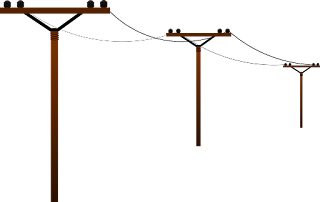
And in conversations last week with representatives of the Wireline Competition Bureau and legal advisors to Chairwoman Jessica Rosenworcel and Commissioner Geoffrey Starks, Charter presented specific evidence of issues relating to the processing of pole applications that threaten its ability not just to connect rural Americans, but to meet deadlines associated with RDOF subsidies.
Maureen O'Connell, Charter Vice President, Regulatory Affairs, detailed one impasse, involving the Warren Rural Electric Cooperative Corporation (WRECC) in rural Kentucky, that jeopardizes its plans to provide broadband to over six thousand unserved locations:
At the permit processing rate currently proposed by WRECC, it would take 14 years to complete the permitting process for attachments to poles to reach these locations – about seven times longer than planned and double the maximum allowed to deploy these federal taxpayer dollars under RDOF. That means a child in kindergarten now will have graduated from high school before the permitting phase is complete.
Charter also identified pole-related disputes in California, Hawaii, and South Carolina and "expressed concern that some pole owners have competitive incentives to delay broadband deployment by attaching entities because they are themselves affiliated with broadband providers who are putative competitors to the attaching entities, including (in the case of WRECC) affiliates or business partners receiving RDOF support."
In July 2020, NCTA filed with the FCC a Petition for Expedited Declaratory Ruling (NCTA Petition) seeking relief in rural areas including: (1) various clarifications regarding the appropriate allocation of pole replacement costs between attachers and owners, and (2) timely resolution of pole-related disputes via the Commission's Accelerated Docket.
Free State Foundation President Randolph May and Director of Policies Studies and Senior Fellow Seth Cooper filed Comments in support of the NCTA Petition.
In a January 2021 Declaratory Ruling, the Wireline Competition Bureau did clarify that "utilities may not require requesting attachers to pay the entire cost of pole replacements that are not necessitated solely by the new attacher and, thus, may not avoid responsibility for pole replacement costs by postponing replacements until new attachment requests are submitted."
As a general matter, however, the Wireline Competition Bureau denied the NCTA Petition, concluding that "it is more appropriate to address questions concerning the allocation of pole replacement costs within the context of a rulemaking, which provides the Commission with greater flexibility to tailor regulatory solutions."
The picture painted by Charter underscores how important it is for the FCC to provide additional clarity and guidance with respect to the respective rights and responsibilities of pole owners and attachers.
In that regard, I point out that, in a statement to Telecompetitor, a self-described "puzzled" WRECC disputed Charter's allegations and expressed "hope than we can come to an agreement soon." Thus, it would seem that the parties involved are not on the same page. Prompt intervention by the FCC holds the potential to accelerate the deployment of network infrastructure.
In other words, the policy goal of rapid rural broadband expansion compels precisely the relief requested in the NCTA Petition: "expedited consideration under the Accelerated Docket."
As noted above, the Wireline Competition Bureau denied NCTA's request for declaratory relief because it believed that a rulemaking of general applicability would be the more appropriate vehicle. It is time to begin that process.
Monday, May 10, 2021
Study: Bad Data Diverting Broadband Subsidies Targeting the Unserved to Already Connected Areas
A Competitive Carriers Association (CCA) study raises serious concerns that, contrary to the FCC's intentions, ratepayer dollars will be used to subsidize the overbuilding of existing broadband networks.
The goal of the $20.4 billion Rural Digital Opportunity Fund (RDOF) is to incentivize the construction of broadband network infrastructure specifically and exclusively in those areas that are, and are likely to remain, unserved.

That, of course, requires a factual appreciation of where "broadband," currently defined by the FCC as delivering download speeds of at least 25 megabits per second (Mbps) and upload speeds of at least 3 Mbps, is – and, more to the point, is not – available.
By all accounts, however, the broadband availability data that currently exists is fraught with problems.
For more information on the Digital Opportunity Data Collection, an in-progress mapping-modernization effort initiated by then-Chairman Ajit Pai in 2017 and funded by Congress at the end of last year, please see "A Primer: The COVID Relief Bill's Broadband Funding Provisions," a December 26, 2020, post to the FSF Blog, and "Congress Should Fund Needed Broadband Maps This Session," a November 2020 Perspectives co-authored by Free State Foundation President Randolph May.
Nevertheless, based upon the belief that existing data does indicate with sufficient accuracy those census blocks completely lacking broadband, the FCC conducted the RDOF Phase I reverse auction at the end of last year. 180 bidders won a total of $9.2 billion in subsidies to connect 5.2 million locations understood to be unserved.
But according to "Missed Opportunity: How the Rural Digital Opportunity Fund Wastefully Subsidizes the Connected," a study the CCA filed with the FCC on May 6, as much as $1 billion of that money – more than 10 percent – instead will go "to wealthy, densely populated areas that already have access to broadband."
High-profile examples include Cupertino, California, the home of Apple Inc.; Fisherman's Wharf in San Francisco; and parts of the downtown Chicago business district.
All told, CCA warns that RDOF Phase I subsidies could be used to overbuild existing, privately funded broadband networks serving nearly 300,000 locations and over 400,000 people.
The CCA therefore urges the FCC to "reaffirm its commitment to closing the digital divide by using its ample authority to prevent scarce, high-cost funds from needlessly subsidizing broadband deployment in areas that already have it."
Tuesday, February 02, 2021
Charter Announces Ambitious Project to Deploy Broadband to Over One Million Unserved Locations
Yesterday Charter Communications announced a new multiyear, multibillion-dollar initiative to deliver gigabit broadband speeds to over a million customer locations in rural and other areas presently unserved.
Charter will invest $5 billion in this infrastructure expansion project, including $1.2 billion that it won in the Rural Digital Opportunity Fund (RDOF) Phase I reverse auction. This large-scale effort, which will extend Charter's fiber optic network in 24 states, is in addition to existing, privately funded buildout plans.
The project is expected to generate 2,000 new jobs and expand Charter's network mileage coverage by 15 percent.

In announcing the initiative, Tom Rutledge, Chairman and CEO of Charter Communications, explained that "[t]he pandemic has further highlighted the need for broadband availability and adoption and Charter is committed to furthering its efforts as part of the comprehensive solution needed to address these challenges."
One potentially significant external factor that could impact the timing of this project: utility pole permitting and "make-ready" processes.
Free State Foundation President Randolph May and Director of Policy Studies and Senior Fellow Seth Cooper submitted comments to the FCC in September 2020 in support of a Petition filed by NCTA – The Internet & Television Association seeking an expedited declaratory ruling regarding pole replacements and pole attachments.
Specifically, they argued that the Commission should:
- Prohibit utility pole owners in unserved areas from requiring broadband providers to bear the entire costs of new replacement poles;
- Place pole attachment disputes on its accelerated docket to expedite their resolution; and
- Clarify that it has authority to order pole owners involved in disputes involving unlawful delays and denials to complete pole replacements within specific timeframes.
Mr. Cooper posted to the FSF Blog on this topic, as well.
On January 19, 2021, the Wireline Competition Bureau released a Declaratory Ruling that, while declining to weigh in broadly on the issues presented in the Petition filed by NCTA, did narrowly "clarify that it is unreasonable ... for utilities to impose the entire cost of a pole replacement on a requesting attacher when the attacher is not the sole cause of the pole replacement."
Subscribe to:
Posts (Atom)


 Posts
Posts

