Showing posts with label Chairman Pai. Show all posts

Wednesday, May 26, 2021

FCC Followed a Careful Process in Approving Wireless L-Band Services

In April 2020, the FCC approved the use of 30 MHz of valuable L-Band spectrum for commercial wireless services, including 5G services. This will boost the U.S. economy and our nation's standing in the race for 5G global leadership. Now disgruntled parties who want to delay or undo the L-Band Order are badmouthing it. But their attacks on the agency process that preceded the approval are easily shown to be untrue. 

In its L-Band proceeding, the FCC followed the law and engaged its engineering expertise on spectrum interference issues. The Commission's carefully balanced order will promote innovation, investment, and jobs while providing safeguards for GPS services in nearby spectrum bands. 


On a 5-0 bipartisan vote, the FCC authorized Ligado Networks to deploy a mixed mobile-satellite network using licensed L-Band spectrum that previously has gone unused. Ligado is pursuing opportunities for private network services. According to the L-Band Order, Ligado plans to invest up to $800 million in network capabilities, which could create over 8,000 jobs. In February 2021, Ligado announced its collaboration with Rakuten Mobile to co-develop 5G private network solutions for critical infrastructure industries such as energy, utilities, healthcare, and agriculture. 

As Ligado Networks moves forward with its innovative network plans, its opponents are trying to nitpick the FCC's process leading up to the L-Band Order. For instance, op-eds by Diana Furchtgott-Roth published in April and May of this year rehash attacks on the L-Band proceeding. The most fanciful criticisms of the proceeding were originally made by Sen. James Inhofe in a May 2020 floor speech. Sen. Inhofe claimed that the Commission's process amounted to "a hasty decision" suddenly made "in the darkness of a weekend." Others, including Ms. Furchtgott-Roth, subsequently quoted Sen. Inhofe's wild claims for purposes of attacking the L-Band Order. However, it's a ghost story, not reality.
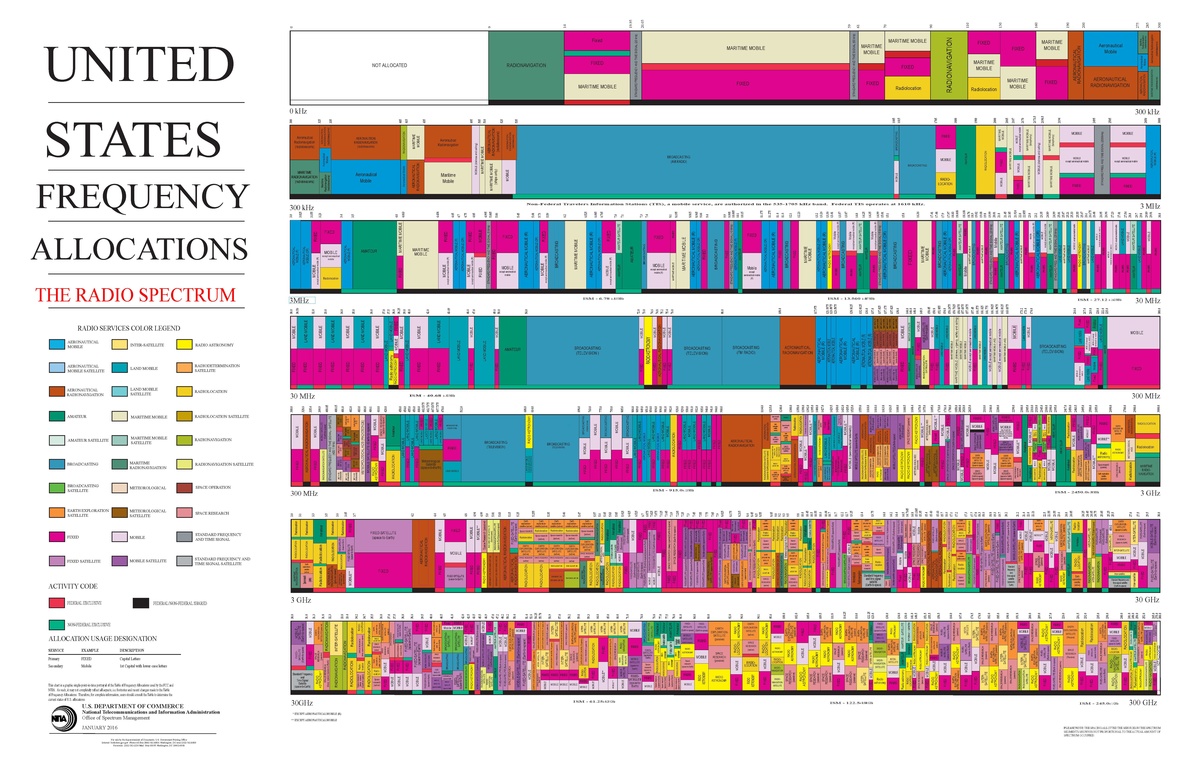
 

The FCC proceeding that culminated in the L-Band Order goes back a decade. Federal agencies, the GPS industry, the wireless industry, and others have closely tracked its developments. In 2016 and 2018, the Commission requested public comments on Ligado Networks' application to deploy its proposed mobile-satellite network. In an August 2019 NTIA report, the executive branch expressly acknowledged an anticipated a decision by the Commission on Ligado's application. And in the fall of that year, the Commission actually shared a draft of its order with NTIA. That the Commission was working methodically toward a decision in its L-Band proceeding was a surprise to no one. Moreover, the agency process that produced the L-Band Order complied with the Administrative Procedure Act's notice-and-comment requirements. 


Furthering the ghost story version of events, Ms. Furchtgott-Roth's op-eds call the L-Band Order "ill-advised" and "inexplicable." Not so. The FCC was ably advised by the agency's Office of Engineering and Technology. The Commission's staff engineers duly considered submissions from federal agencies and all interested parties, conducting a careful analysis of alleged or potential signal interference issues. For instance, the Commission was unpersuaded by certain executive agency claims about possible signal interference with military devices operating outside of their assigned spectrum band.


Executive branch agencies may be unhappy that the FCC didn't agree with their views. But the Commission has the legal responsibility and the expertise to address conflicting views about commercial spectrum usage, and the agency relied on that expertise to make its decision.   


In a January 2021 address to the Information Technology Industry Council, then-FCC Chairman Ajit Pai cut to the chase about federal agency disagreements on spectrum use and overheated claims that aren't backed up by hard facts: 


[A]rguably the biggest thing hampering efforts to use spectrum more efficiently is – our own government. On proceeding after proceeding, we saw that other federal agencies tried to throw up roadblocks. Rather than look out for the public interest, many agencies were looking out for their narrow parochial interest. And since most don't have in-house spectrum expertise, they ended up simply parroting the exaggerated, hysterical, and often outright false claims being made by the industries they regulate. To achieve their aims, they ended up bypassing normal channels and complaining to Congress or the media in an effort to block or delay efforts to free up spectrum for commercial use.


Among the highly dubious claims called out by Chairman Pai, throw in Ms. Furchtgott-Roth's that "the entire GPS system is endangered" by the L-Band Order. 


The deliberative process undertaken by the FCC is a reflected in the L-Band Order's specifics to for safeguarding GPS services. Rather than give Ligado Networks a free pass, the Commission imposed significant conditions on L-Band usage to avoid potential signal interference with incumbents in adjacent spectrum bands. Ligado negotiated agreements with major GPS equipment manufacturers for resolving signal interference concerns. The Commission incorporated those agreements into the L-Band Order, making them enforceable by the agency. Also, the Commission required Ligado to establish a 23 megahertz guard-band, lower base station power levels 99% compared to Ligado's 2015 proposal, and replace any government GPS devices that experience harmful interference. And Ligado must be able to shut off its network within 15 minutes of any request by the Commission. 


In January of this year, the newly-constituted FCC rightly rejected an NTIA petition to stay the L-Band Order. Ligado Networks' 5G endeavors ought to be encouraged, not hindered. The careful process undertaken by the Commission should instill confidence in the agency's decision to green light wireless services in the L-Band. And resort by opponents to easily disprovable criticisms of the agency's process also boost confidence in the resulting order. 


(For more on this subject, see the May 2020 Perspectives from FSF Scholars paper by Free State Foundation President Randolph J. May and I titled: "FCC's Order Approving Ligado's Next-Gen Wireless Network: A Deliberative Process that Protects Against Signal Interference.") 

Friday, January 15, 2021

Text of FCC Chairman Ajit Pai's Farewell Free State Foundation Address Now Available

On January 8, the Free State Foundation hosted a virtual farewell address by FCC Chairman Ajit Pai. The topic was FCC process reform. The text of his remarks is now available on the FCC's website.

Chairman Pai discussed three pillars of good government: transparency, reliance upon economics and data analysis, and maximizing the effectiveness of the people who do the work of the agency – in his words, "the FCC's greatest asset."

As noted in an earlier post to the FSF Blog, video of Chairman Pai's speech can be accessed on our YouTube page.

The Free State Foundation congratulates Chairman Pai on his many accomplishments at the FCC's helm and wishes him well in all future endeavors.

Tuesday, December 15, 2020

Catch the Teleforum on Chairman Pai's Tenure at the FCC

On Thursday, December 17 at noon Eastern time, the Federalist Society will host a teleforum event: "Chairman Ajit Pai's Tenure at the FCC: Fireside Chat and Panel Discussion." The chat with Chairman Pai will be followed by a discussion by panel members, including Free State Foundation President Randolph May. Be sure to call in on Thursday the 17th and listen to what likely will be a wide-ranging exchange reviewing the FCC's accomplishments during Pai's chairmanship as well as the future of federal communications policy. Information about the upcoming teleforum can be found on the Federalist Society's website.

UPDATE: Audio of the teleforum is now available here. 

Wednesday, October 28, 2020

Pending Proposal Would Dedicate 5.9 GHz Spectrum for Unlicensed Wireless Services

Free State Foundation President Randolph May tweeted the following regarding the FCC Chairman Ajit Pai's circulation of draft rules for dedicating 5.9 GHz spectrum for unlicensed services like Wi-Fi:

Thursday, October 15, 2020

MEDIA ADVISORY: The FCC Moves Forward in Its Section 230 Proceeding

The following statement may be attributed to Free State Foundation President Randolph May:

It looks like FCC Chairman Ajit Pai agrees with the comments that the Free State Foundation submitted to the Commission contending that the agency possesses the authority to clarify the meaning of some of Section 230's terms and that it may be able to do so consistent with the First Amendment. In our comments, we emphasized that there is a difference between the FCC providing its interpretation as to the meaning of Section 230's provisions, for whatever weight the courts then may decide to give to the agency's interpretation, and the FCC taking enforcement actions pursuant to Section 230. And we emphasized that any action that has the effect of narrowing Section 230's broad grant of immunity doesn't necessarily violate the First Amendment. There is an important distinction, for purposes of the First Amendment application, between protecting a content provider's, say Twitter's, right to decide what to carry or delete, and granting such content provider immunity from suits for all of its content moderation decisions. I'm pleased, but not surprised, that Chairman Pai appreciates these points regarding the First Amendment and the Commission's legal authority.

Wednesday, September 09, 2020

FCC to Consider Actions Against 911 Fee Diversion

In anticipation of its September 30 public meeting, the FCC has released a draft Notice of Inquiry on ways to combat states' diversion of 911 fees to things that are unrelated to non-911 purposes. The Commission's Fact Sheet states that "between 2012 and 2018, American states and jurisdictions diverted a total of over $1.275 billion in 911 fees to non-911 programs or to the state’s general fund." Annual reports by the Commission call out those states and jurisdictions that apparently misuse fee revenues collected for 911. And the Commission previously has mulled penalties for states that divert 911 fees, including disqualification from grants or other subsidies. Chairman Ajit Pai is to be applauded for circulating the draft Notice. It's a step forward for ensuring that 911 fees are actually used for their stated purpose.   


Thursday, April 16, 2020

MEDIA ADVISORY: FCC Set to Vote on Ligado's Applications to Use L-Band Spectrum

Free State Foundation President Randolph May issued the following statement regarding Chairman Pai's proposed order granting, with conditions, Ligado Networks' applications to use L-Band spectrum:
Above all else, I'm pleased that Chairman Pai has circulated a draft order. For several years now, I've advocated that the FCC move ahead to make a decision on Ligado's long-pending applications. I've never professed to render any definitive opinion on the finer points of the various interference claims involved in this years-long controversy. But I know that Ligado has gone to great lengths to modify its plans to address claimed interference concerns. And have confidence in the technical expertise of FCC's engineering staff and the commissioners' willingness to take that expertise into account. So I hope the Commission now acts promptly. This is another FCC action that can advance the U.S. position with regard to 5G deployment.

Thursday, April 09, 2020

Chairman Pai Talks Rapid Responses to COVID-19 and More in New Teleforum

On April 3, FCC Chairman Ajit Pai participated in a "Capital Conversations" teleforum hosted by the Federalist Society on "The FCC and the COVID-19 Pandemic." Audio of that teleforum is now available to stream or download from the Federalist Society's website. In the teleforum, Chairman Pai gives a quick overview of the FCC's activities in responding to the flu pandemic, including the Commission's Keep Americans Connected Pledge and COVID-19 Telehealth Program. During the question-and-answer portion, Chairman Pai also addresses current communications policy topics ranging from the Restoring Internet Freedom Order and Mozilla v. FCC remand to spectrum proceedings such as C-Band, L-Band, and 6 GHZ. 

Thursday, March 19, 2020

Chairman Pai's Keynote and Hot Topics Panel Videos from #FSFConf12 Are Released!

The Free State Foundation held its Twelfth Annual Telecom Policy Conference on March 10 at the National Press Club in Washington, DC. This year's Conference theme was: "Broadband Beyond 2020: Competition, Freedom, and Privacy." The final two #FSFConf12 videos have now been released and they are available online. 

Keynote Address – Ajit Pai, Chairman, Federal Communications Commission, delivered via video and "Conversation with FCC Commissioner Michael O'Rielly and former FCC Commissioner Mignon Clyburn" with Free State Foundation PresidentRandolph May(Begins at 8:37 on video)
  

Panel: "Hot Topics in Communications Policy"

Moderators: 

Seth Cooper, Director of Policy Studies and Senior Fellow, The Free State Foundation, and Andrew Long, Senior Fellow, The FreeState Foundation

Panelists:

James Assey, Executive Vice President, NCTA – The Internet & Television Association; Mary Brown, Senior Director for Technology and Spectrum Policy, Cisco; James Cicconi, Senior Executive Vice President, AT&T; and Deborah Lathen, Chair, Policy Committee, MMTC, Former Chief, FCC Cable Services Bureau, and President, Lathen Consulting LLC


Other videos from #FSFConf12 are available and they are linked from this March 17 blog post by Free State Foundation Senior Fellow Andrew Long. 

Thursday, February 06, 2020

FSF President Randolph May Reacts to FCC's C-Band Satellite Proposal

The following statement may be attributed to Free State Foundation President Randolph May regarding the FCC's proposal for repurposing C-Band spectrum:

The FCC's proceeding looking to repurpose the C-Band is one of the most complex proceedings before the Commission, but surely one of the most important. The objective is to free up much needed valuable mid-band spectrum so that it is available for wireless operators to expand and enhance their networks to provide next-generation 5G services, while ensuring that incumbent providers in the band are able to continue to provide important services to cable operators and other video distributors with minimal disruption.

Importantly, there is widespread agreement that time is of the essence in repurposing the C-Band spectrum if the U.S. is not going to fall behind China and other countries in building out 5G networks. So, I readily commend FCC Chairman Ajit Pai for his diligence and hard work in keeping the FCC on track to act in a timely fashion.

The plan Chairman Pai announced today is a thoughtful effort to balance the various interests in a way that advances overall consumer welfare and the national interest. Because speed in repurposing the C-Band spectrum is all-important, providing sufficient compensation to the incumbent satellite operators to incentive their active cooperation and avoid litigation that might derail implementation is a key objective. In that regard, to ensure the prospect of sufficient payments, I might prefer a compensation plan that ties payments to incumbent satellite providers to the value of the spectrum to be auctioned. That said, while I haven't seen the details of Chairman Pai's plan and reserve judgment, the proposal contemplating that the satellite operators could receive up to $9.7 billion in accelerated relocation payments if certain repurposing timelines are met appears to be a meaningful step in the right direction of providing a sufficient incentive for the incumbent providers to cooperate.    

Monday, February 03, 2020

FCC Chairman Pai is Luncheon Speaker at FSF's Twelfth Annual Conference

The Free State Foundation will hold its Twelfth Annual Telecom Policy Conference on Tuesday, March 10, 2020, at the National Press Club in Washington, DC. The Luncheon speaker is FCC Chairman Ajit Pai. Registration is now open.


Other keynote speakers at the upcoming conference include:
  • U.S. Deputy Attorney General Jeffrey Rosen
  • FCC Commissioner Michael O'Rielly
  • FCC Commissioner Brendan Carr
  • Former FCC Commissioner Mignon Clyburn
  • FTC Commissioner Christine Wilson

Confirmed speakers at the conference also include:
  • Alden Abbott – General Counsel, FTC
  • Jim Cicconi – Sr. Executive VP-External and Legislative Affairs, AT&T
  • Maurita Coley – President and CEO, Multicultural Media, Telecom and Internet Council
  • Thomas Johnson, General Counsel, FCC

REGISTRATION IS COMPLIMENTARY, INCLUDING CONTINENTAL BREAKFAST AND LUNCH. BUT YOU MUST REGISTER TO ATTEND.
REGISTER NOW HERE!

#FSFConf 12

Thursday, January 23, 2020

Keynote Speakers Announced for FSF's Twelfth Annual Conference

The Free State Foundation will hold its Twelfth Annual Telecom Policy Conference on Tuesday, March 10, 2020, at the National Press Club in Washington, DC. The Conference theme for this year is "Broadband Beyond 2020: Competition, Freedom, and Privacy." Five keynote speakers for the conference have been announced:

U.S. Deputy Attorney General Jeffrey Rosen
FCC Chairman Ajit Pai
FCC Commissioner Michael O'Rielly
FCC Commissioner Brendan Carr
FTC Commissioner Christine Wilson


REGISTRATION IS COMPLIMENTARY, INCLUDING CONTINENTAL BREAKFAST AND LUNCH. BUT YOU MUST REGISTER TO ATTEND.
REGISTER NOW HERE!

#FSFConf12

Thursday, December 12, 2019

C Proposes to Make 5.9 GHz Spectrum Available for Unlicensed Uses

Today, the FCC adopted a proposed rulemaking that would make valuable unused spectrum available for unlicensed Wi-Fi uses. According to the Commission's news release:
[T]he Commission proposes to designate the lower 45 megahertz of the band for unlicensed uses like Wi-Fi. This 45 megahertz sub-band can be combined with existing unlicensed spectrum to provide cutting-edge high-throughput broadband applications on channels up to 160 megahertz wide. 
Congratulations to the Commission and to Chairman Ajit Pai. The Commission's vote to issue its proposed rulemaking is an important step in making more spectrum resources available for wireless services.  

Thursday, April 18, 2019

FCC to Vote on Reallocating More Spectrum for 5G Services


In an April 17 FCC Blog post, Chairman Ajit Pai announced a new proposal to reallocate more spectrum for next-generation wireless services:
In addition, we’ll also move forward with yet another item to free up spectrum for wireless services. The President’s Fiscal Year 2020 budget — which “propos[es] legislative changes . . . that pertain to the FCC” and that “are designed to improve spectrum management and represent sound economic policy” — calls on the Commission to "either auction or use fee authority to assign spectrum frequencies between 1675–1680 megahertz for flexible use by 2020, subject to sharing arrangements with Federal weather satellites.” I agree with opening this spectrum for commercial use so that’s exactly what I intend to do. So today, as the first step down that path, I’m circulating a proposal to reallocate spectrum in the 1675–1680 MHz band for shared use between incumbent federal operations and new, non-federal fixed or mobile operations.
A TRDaily report quoted Ligado Networks Board Chairman Ivan Seidenberg, who commended the proposal’s potential benefits: “[I]f combined with other available frequencies, it could unleash 40 MHz of vital lower mid-band spectrum to serve mission-critical industrial Internet of Things and other emerging 5G applications.”

Reallocating 1675–1680 MHz for shared federal and non-federal commercial use, as Chairman Pai proposes, will help supply wireless infrastructure needs and further U.S. competitiveness in the global race to 5G. The creditworthy proposal is on the FCC’s agenda for its upcoming public meeting on May 9.

Thursday, October 25, 2018

FCC Modifies Spectrum Rules to Increase 5G Deployment

On Tuesday, the FCC voted on two important spectrum-related items that will help advance 5G deployment throughout the United States.
First, the Commission adopted a Report and Order that changes the licensing and technical rules governing Priority Access Licenses that will be issued in the 3.5 GHz band – including larger license areas, longer license terms, renewability, and performance requirements. By reducing the number of licenses a wireless provider must acquire and the administrative costs of renewing those licenses, these changes will promote efficient use, encourage additional investment in the 3.5 GHz band, and ultimately streamline deployment of 5G networks.
The FCC also adopted a Notice of Proposed Rulemaking that would open up 1,200 megaherts of spectrum in the 6 GHz band to allow unlicensed devices to operate without interfering with licensed services that will continue to use this spectrum. As Chairman Ajit Pai said in his statement: “From Wi-Fi routers to connected home appliances to retro cordless phones for those of us who still have landlines, we use devices that connect via unlicensed spectrum every day. Indeed, they’ve become so popular that there is now a shortage of airwaves dedicated for their use.”
By proposing to free up more unlicensed spectrum, the FCC's action could lead to more Wi-Fi offloading, which, in turn, frees up space on mobile networks and allows for additional next-generation services. 5G wireless deployment is projected to create 275 billion in investment, 3 million jobs, and $500 billion in gross domestic product. And both of these items adopted by the Commission this week could advance the delivery of those economic benefits.


Friday, October 12, 2018

Reducing Regulatory Costs Will Increase Broadband Investment


Earlier this week, FCC Chairman Ajit Pai delivered a speech at the International Institute of Communications' International Regulators Forum, where he discussed several initiatives and proceedings undertaken by the Commission that will help spur broadband investment.
Specifically, Chairman Pai stated:
The best way to make sure every American has better, faster, cheaper Internet access is to set a market-based regulatory framework that promotes competition and increases network investment. We need to make it as appealing as possible for private companies to raise the capital and hire the crews to deploy networks to unserved and underserved areas. That is why the FCC has removed many regulatory barriers to lower the cost and speed the process of building infrastructure. For example, the agency has adopted reforms to make it easier and cheaper for broadband providers to access utility poles. The FCC has also modernized rules that required carriers to maintain yesterday's copper networks, which frees more money to build tomorrow's fiber networks.
Chairman Pai also gave some specific examples of the rules and proposals adopted by the FCC that will cut regulatory costs and streamline broadband deployment for wireline, mobile, and satellite broadband services. In a March 2018 Perspectives from FSF Scholars titled "Reaching Rural America: Free Market Solutions for Promoting Broadband Deployment," I explained how the increasing capabilities of emerging broadband technologies, like satellite, fixed wireless, and mobile wireless, will provide unserved and rural consumers with a viable alternative for a broadband connection. I also outlined what the FCC has done to accelerate the deployment of these services and what still needs to be done at the federal, state, and local levels.
As you can see from the graph above, rural broadband deployment improved dramatically from 2012 to 2016. If the FCC continues to adopt market-based rules and reduce the regulatory costs of broadband deployment, providers of all broadband technologies will be incentivized to invest in rural and underserved areas, closing the gap of the digital divide.

Monday, July 23, 2018

FCC Transparency Act Would Mandate Releasing Draft Items Before Vote

Last week, Representative Adam Kinzinger (R-IL) reintroduced the FCC Transparency Act, H.R. 6422, which would mandate that the Commission publish the draft items to be considered at public meetings 21 days in advance of the vote. The FCC adopted this practice under Chairman Ajit Pai but this legislation would require the practice for all Commissions moving forward.

FCC Commissioner Michael O’Reilly made the following statement about the legislation:

I applaud Representative Kinzinger on reintroducing the Federal Communications Commission Transparency Act. This legislation codifies the current and critical Commission practice of publicly posting items three weeks in advance of their consideration at monthly Commission meetings. As a result of this practice, unnecessary discussions of non-existent issues have been eliminated, conversations are more productive, Commissioners are still speaking their minds and negotiating internally on items, and work product has greatly improved. I have also seen comments from all Commissioner offices — Republican and Democrats — in favor of the practice. Despite the broad support for this program, as well as Chairman Pai’s effort to initiate this reform for added agency transparency, I believe codifying this practice is important to ensuring its longevity.
FSF scholars have advocated for draft items to be released before the Commission votes on them, because the additional transparency promotes rule of law and due process norms, enhances public confidence in the integrity of the agency’s decision-making, and increases the FCC’s efficiency. See this January 2017 blog by FSF President Randolph May.

Thursday, July 12, 2018

New FCC Rules Do Not Force Consumers to Pay $225 to File a Formal Complaint

Today, the FCC voted to streamline rules for its formal complaint process. Specifically, the rules create a uniform deadline of 30 days for a defendant to file an answer to a formal complaint and they set a 270-day shot clock for resolution of formal complaints.
Earlier this week, some false reports circulated through the media suggesting the new rules “would essentially force” consumers to pay $225 to file a formal complaint. But the new rules do not eliminate or change the informal complaint process, which is available to all consumers at the very low price of $0. The new rules simply set guidelines for the formal complaint process. Jimmy Kimmel spread this false information with a less than hilarious joke on his late night talk show. Realizing he was incorrect, Jimmy Kimmel deleted the segment from his Twitter account.

Tuesday, May 22, 2018

Increasing Rural Broadband Access Will Advance Rural Telemedicine Access


On May 21, 2018, the current FCC Chairman Ajit Pai and former FCC Chairman under President John F. Kennedy, Newton Minow, coauthored an article in The Boston Globe titled “In rural America, digital divide slows a vital path for telemedicine.” Many rural Americans have limited access to local health care services, but telemedicine - the delivery of health care services using communications technology - helps bring those services into rural areas. The problem is that many rural Americans also lack sufficient broadband access.
As I stated in a March 2018 Perspectives from FSF Scholars titled “Reaching Rural America: Free Market Solutions for Promoting Broadband Deployment,” the FCC's ongoing initiatives to reduce regulatory barriers and allocate and assign more licensed spectrum will encourage broadband providers to deploy next-generation access in rural and unserved areas. Moreover, the increasing capabilities of wireless broadband technologies, like satellite, fixed wireless, and mobile wireless, will continue to advance the speeds and quality of rural broadband connections, thereby closing the digital divide and increasing access to telemedicine for rural Americans.

Tuesday, May 15, 2018

Broadband Capital Investment Increased Significantly from 2016 to 2017

Free State Foundation scholars have contended for years that heavy-handed regulations generally will depress investment in broadband infrastructure. After the FCC adopted Title II public utility-style regulations in the February 2015 Open Internet Order, I illustrated in a May 2017 blog and graph how broadband capital investment declined by $5.6 billion in the two years following that order.
As broadband providers anticipated the repeal of the Open Internet Order and its Title II public utility-style regulations with the December 2017 Restoring Internet Freedom Order, broadband capital investment increased significantly from 2016 to 2017. Using data collected from annual reports of thirteen large broadband providers, I estimate that total annual broadband capital investment increased by nearly 14% from the end of 2016 to the end of 2017.
The FCC’s adoption of the Restoring Internet Freedom (RIF) Order reclassified broadband as a Title I information service, thereby restoring a light-touch regulatory framework for broadband providers. While only five months have passed since the RIF Order was adopted in an open meeting, the proposal was announced back in April 2017. When FCC Chairman Ajit Pai announced the proposal, he cited the Free State Foundation’s initial estimate on broadband investment, stating that the Open Internet Order "has already cost our country $5.1 billion in broadband capital investment.” Given the voting history of the new Republican majority at the Commission, it was fairly clear then that a significant portion of the heavy-handed Title II regulations would be overturned.
Although the RIF Order will not become fully effective until June 11, 2018, broadband Internet providers have now had a year since the proposal’s announcement to prepare for a more investment-friendly regulatory environment. So, even though broadband providers needed to abide by the Obama-era rules imposed by the Open Internet Order throughout 2017, the data shows that competition in this dynamic marketplace encouraged additional investment activity. My sample of thirteen large broadband providers found that capital investment increased by 13.95% from the end of 2016 to the end of 2017. In my view, this increase is likely due, at least in part, to the prospect of a return to light-touch regulation.
USTelecom reported in October 2017 that industry-wide aggregate broadband capital investment, which is comprised of capital expenditure data for wireline telecommunications, wireless telecommunications, and cable broadband providers, totaled $76 billion in 2016. Therefore, an increase of 13.95% would mean that broadband capital investment increased throughout the industry by $10.6 billion to $86.6 billion in 2017. That is likely a high estimate for just a one-year increase. However, given that broadband providers invested $5.6 billion less than they otherwise would have in 2015 and 2016, industry-wide broadband capital investment should increase dramatically especially now that the new rules will create a more investment-friendly environment.
In fact, from the end of 2011 to the end of 2014 my sample of annual broadband capital investment grew by 14%. However, from the end of 2014 to the end of 2017, my sample of broadband capital investment grew by only 6%. Similarly, USTelecom data show that aggregate broadband capital investment for the U.S. industry grew by over 15% from the end of 2011 to the end of 2014. If industry-wide broadband capital investment totaled $86.6 billion in 2017, that would equate to a 10.5% increase from the end of 2014 to the end of 2017.
In my sample of broadband providers, I have companies like Comcast and Charter, which comprise nearly half of all wireline broadband subscriptions. I also include Verizon, AT&T, T-Mobile, and Sprint, which comprise a large majority of all wireless subscriptions. I note that the $68.8 billion in investment by these 13 companies is 79.4% of the $86.6 billion in industry investment I estimated above, so these companies account for a very large share of total industry investment. So while my estimate of a 14% increase in capital investment should be considered a fairly rough estimate of industry-wide broadband investment, I am very confident that from 2016 to 2017 broadband providers significantly increased capital investment. In fact, any increase in broadband capital investment from 2016 to 2017 is worth noting because investment declined in both 2015 and 2016.
The graph below shows broadband capital investment from 2011 to 2017 by the 13 large broadband providers in my sample.
When regulatory costs increase, as they did with the imposition of the Open Internet Order, broadband providers will invest less than they otherwise would have absent such regulatory costs because the additional costs reduce the return on investment. Although the RIF Order does not take full effect until June 2018, the mere prospect of the FCC returning to a light-touch regulatory regime, along with strong competition among many broadband providers and technologies, appears to have played an important role in encouraging additional capital investment throughout 2017.
There is little doubt that broadband capital investment will continue to increase in 2018 so long as the RIF Order is not overturned by Congress. (See this recent blog by Randolph May.)